
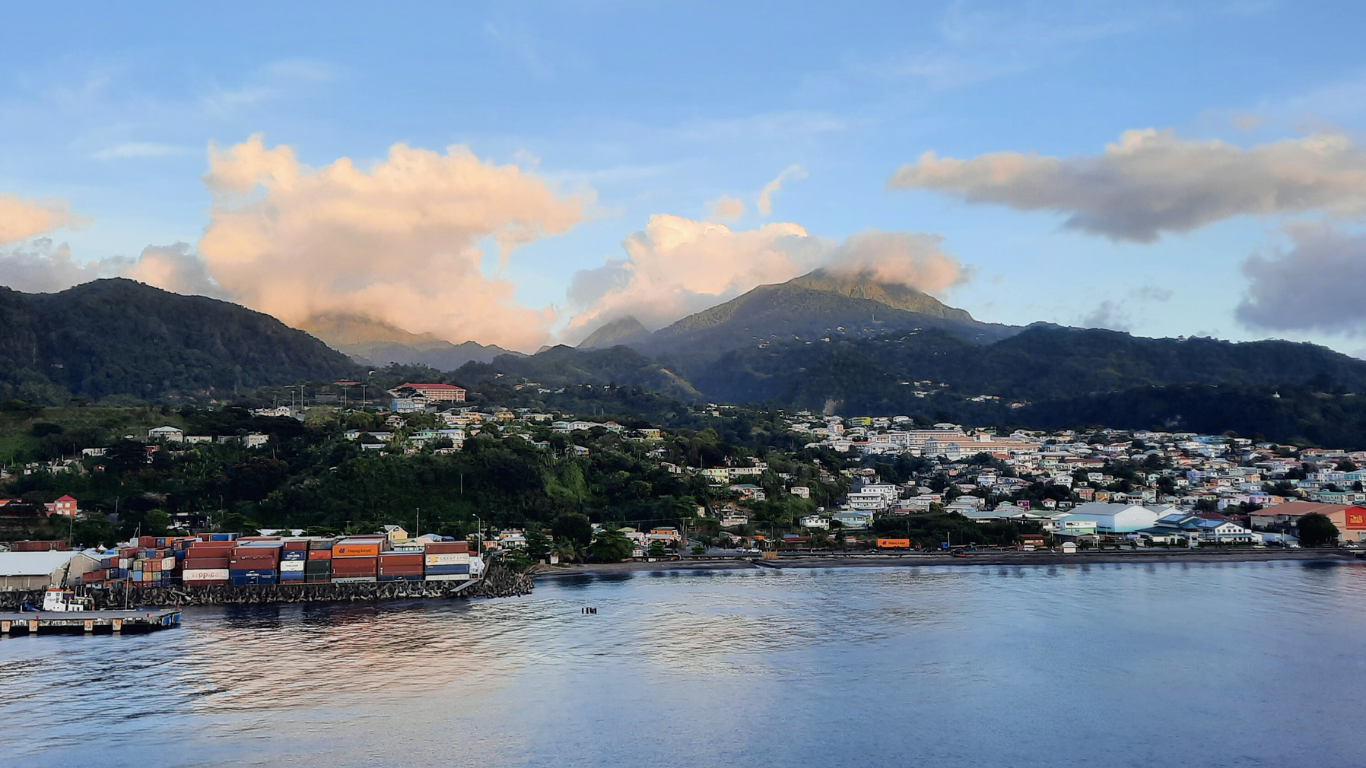
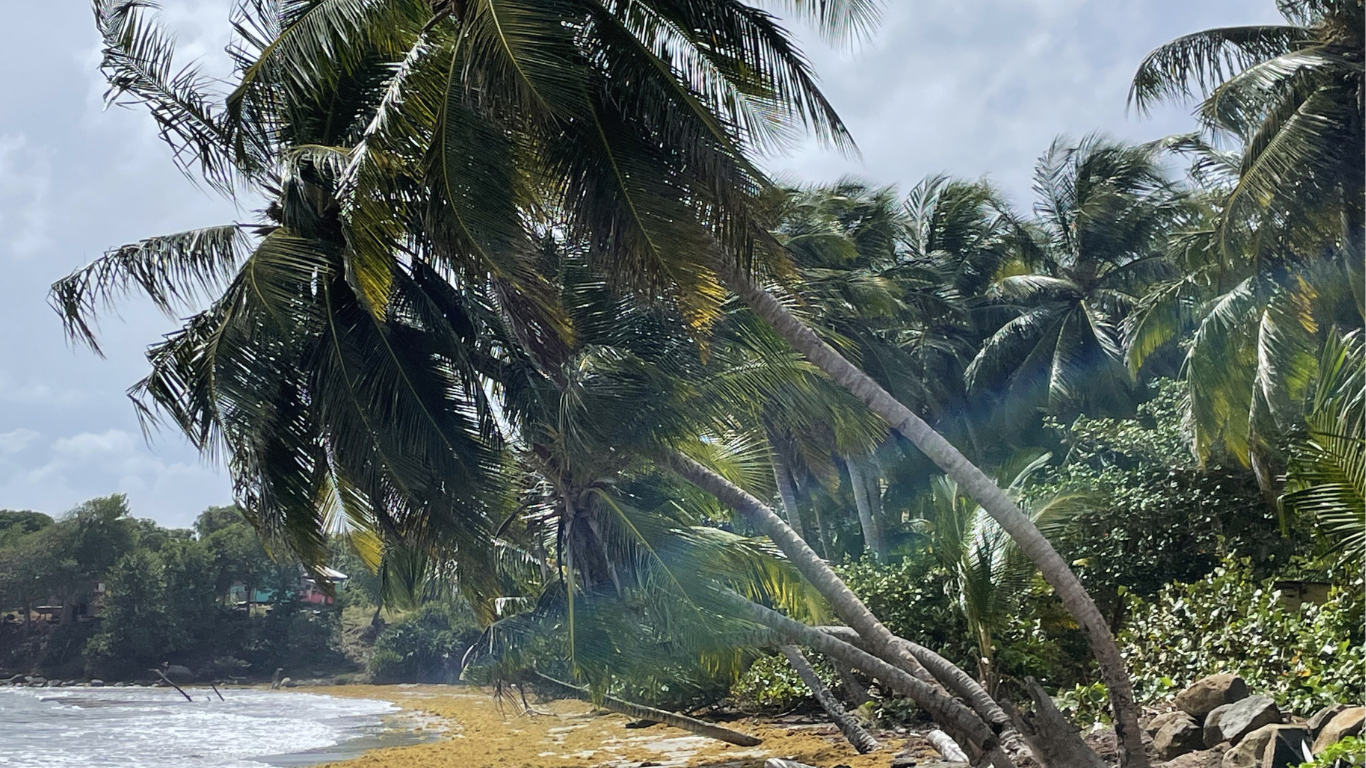
2026 began with a decision: to take each of my three boys on a journey of our own, a mother and son exploring the world together. A way to show them the beauty of this planet and to carve out space for connection that everyday life rarely allows.
After our adventure with Max in Panama, it was now Rick’s turn to pack his suitcase and set off with me. At eight years old, he still carries that tender mix of curiosity and need for reassurance, so I chose a journey that would offer both discovery and a sense of safety, enough structure and comfort for us to relax into the experience.
We set our course for the Lesser Antilles, sailing on a Princess cruise that would carry us from island to island.
Somewhere along the journey, the islands began to feel like siblings to me.
They share the same origins, volcanic earth, dense forests, and a history shaped by colonization, and yet each carries it differently.
Moving from one to another, I started noticing not only their beauty, but their personalities. The different paths each has taken from the same beginning.
Here, the islands are often spoken of as sisters, though some bear unmistakably male names, and they are constantly compared to one another. Each with its own personality, its own pride. And somewhere in the air, almost playfully, you can sense a touch of sibling rivalry between them.
Family traits
Like all siblings, the five countries we visited, St. Kitts and Nevis, St. Lucia, Dominica, Grenada, and Barbados, shared certain characteristics, common “family traits.”
They were once home to Indigenous peoples. Most carry the imprint of French and British colonial history. Today, the majority of their populations are of African descent, their ancestors brought by colonizers to work on sugar plantations.
Now independent, these islands are shaped by tourism, yet move to a rhythm that resists urgency. Their inhabitants seem deeply in love with their islands, a pride that shines through when they speak of them, both touching and admirable.
St. Kitts and Nevis
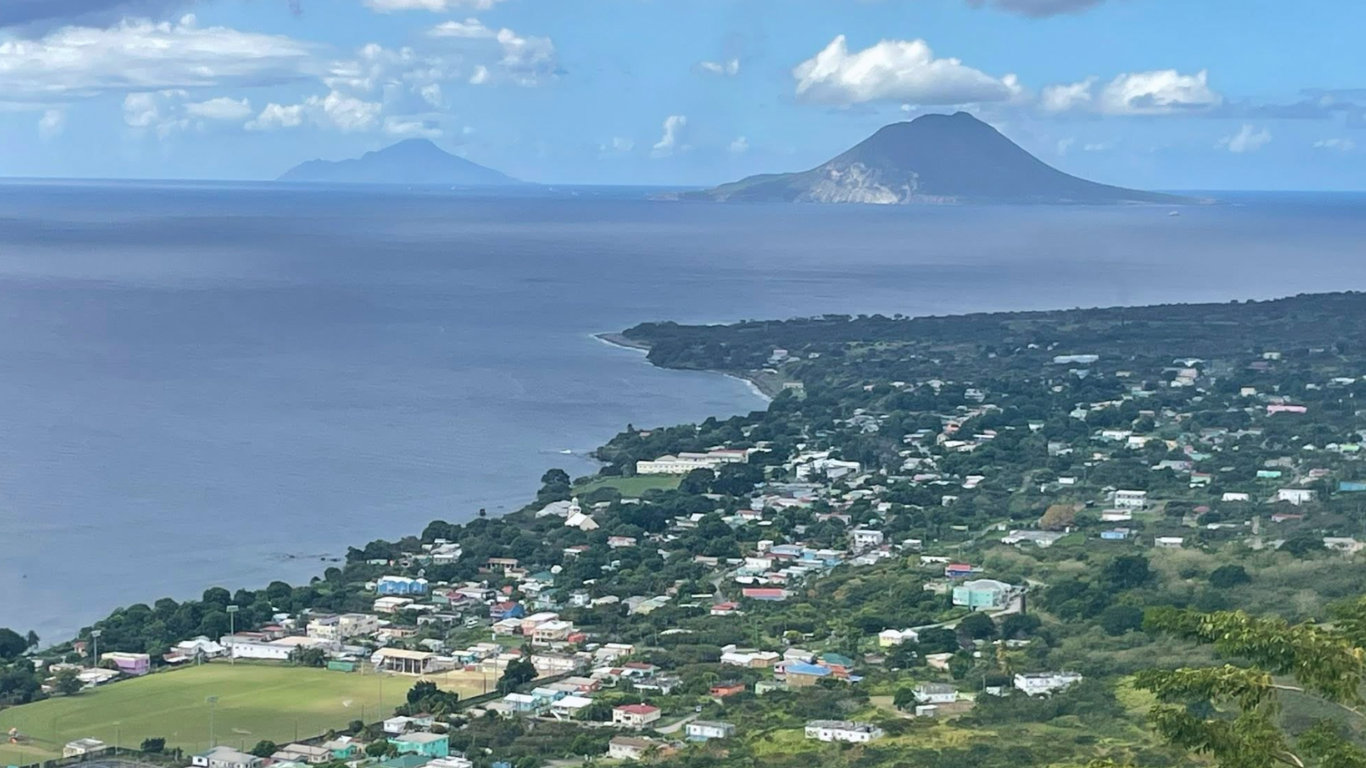
Our first stop after departing from Puerto Rico was St. Kitts, or St. Christopher, as it is formally known.
Our guide, Joseph, led us through the capital, Basseterre, once a battleground between French and British colonizers. Each community built its own churches, and their conflicts were long and unrelenting. The one thing they shared was their attitude toward the island’s Indigenous Kalinago people. Together, they carried out a devastating massacre that nearly wiped out the native population.
Joseph pointed out the site of what had once been the slave market, and the cellar windows of colonial houses where enslaved people were kept. When the British Empire later abolished slavery, compensation was paid not to those who had suffered, but to the colonizers. It is a legacy that still lingers. As Joseph spoke, it was clear that the weight of that history continues to shape life on the island today.
Before sugarcane came to dominate the landscape, tobacco was also cultivated here.
Today, one of the country’s important sources of income is its citizenship-by-investment program, one of the oldest in the world. Joseph spoke with pride about their education system, literacy rate, and universities, and about their international airport, something not all “siblings” can boast.
He also smiled as he told us that the island is almost free of snakes, largely thanks to mongooses brought long ago to control plantation pests, another legacy of colonial times shaping life today.
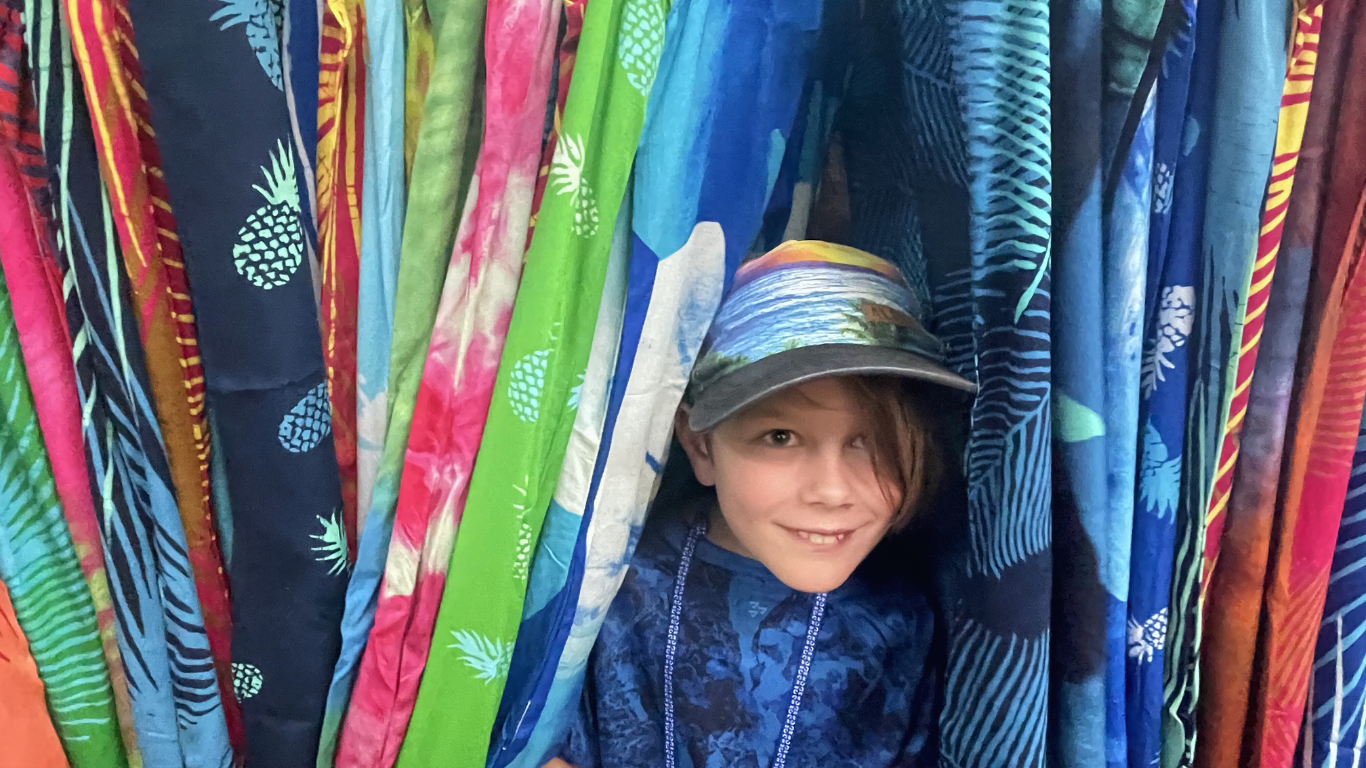
We visited a batik workshop, where vibrant patterns are pressed into fabric, colors and stories slowly finding their way onto cloth.
Dominica
Of all the Caribbean siblings we met on this journey, I felt closest to Dominica. Dominica is the most lush place I have ever seen. No wonder it is often called “the Nature Island of the Caribbean.”
Allowing nature to dominate, perhaps at the expense of mass tourism, has come with a price. There is a sense that Dominica has not prospered in quite the same way as some of her siblings. The roads are patched and uneven, water pipes run openly along their edges, and abandoned cars rest by the roadside, left where they stopped working.
Where St. Kitts greets visitors with carefully arranged chains of souvenir shops and restaurants, Dominica offers something more improvised: small stalls covered with tarpaulins, shaped by necessity rather than design. Even the capital feels closer to a village than to a city.
Hurricanes have also played their part in limiting economic development. The island lies directly in the hurricane belt, and the devastation of Hurricane Maria in 2017 remains very present in people’s memories.
Dominica is home to one of the most significant remaining Kalinago communities in the Caribbean. I was especially taken by our guide, half Kalinago himself, whose enthusiasm was infectious. He liked to call rain “liquid sunshine,” and his knowledge of local plants was remarkable. He also told us that in Dominica, if you do not have money for a doctor, you can turn to herbs.
It made me realize how, in places where formal medical care is not always easily accessible in all areas, people learn to rely on nature and inherited knowledge. And yet, there was no sense of bitterness about these limitations. Like in St. Kitts, there is a deep pride in independence, even if that independence sometimes means facing hardship with fewer external resources than territories.
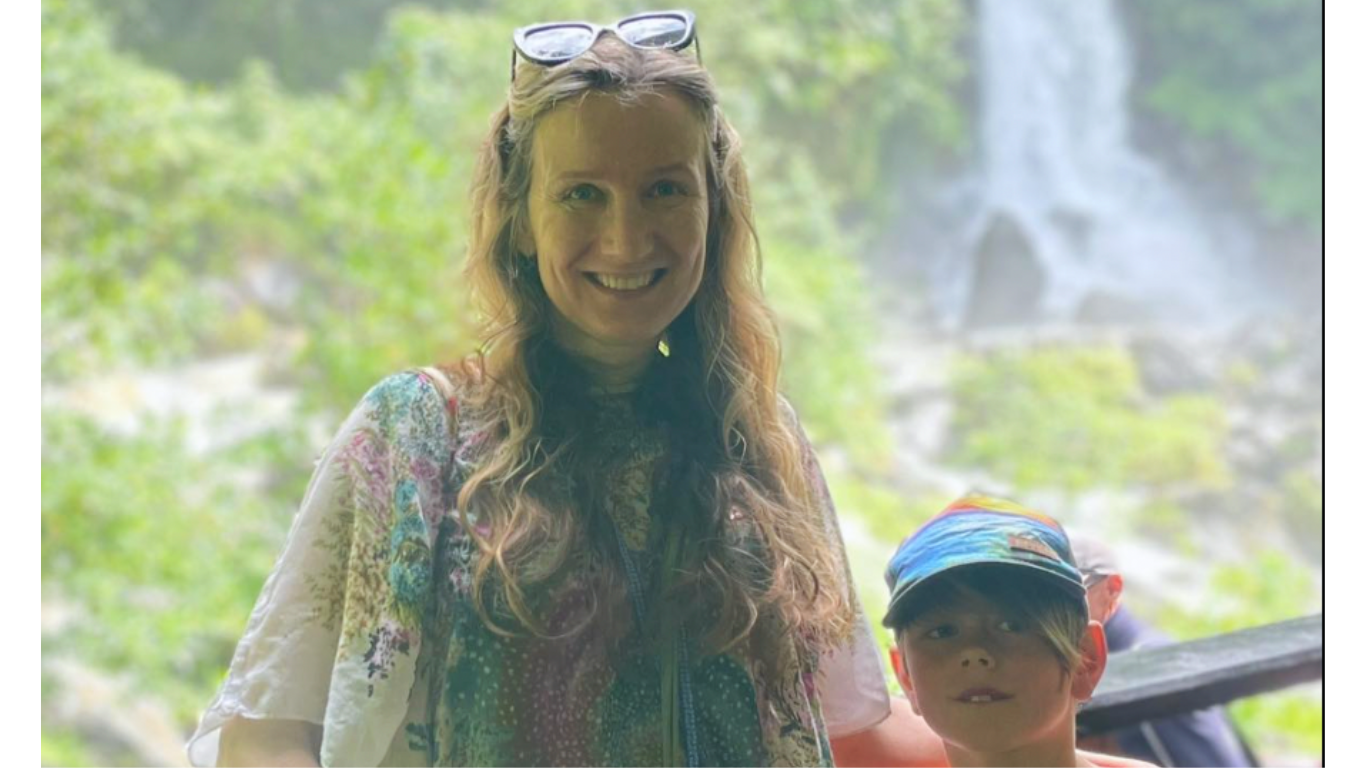
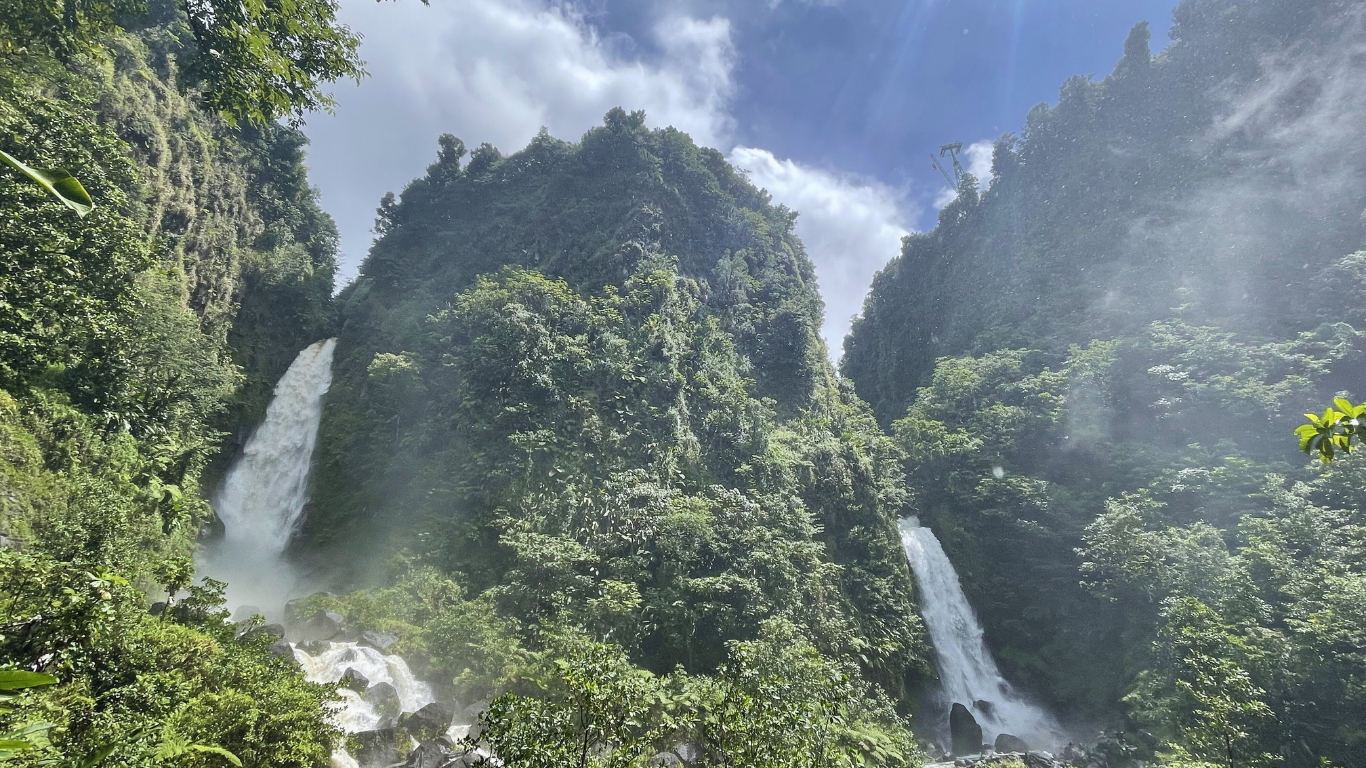
Rick swam in the Emerald Pool, and I stood in awe before the Trafalgar Falls, moved by a beauty that felt both generous and untamed.
St. Lucia
The island of iguanas. Of bananas. Of mountains and geological wonders.
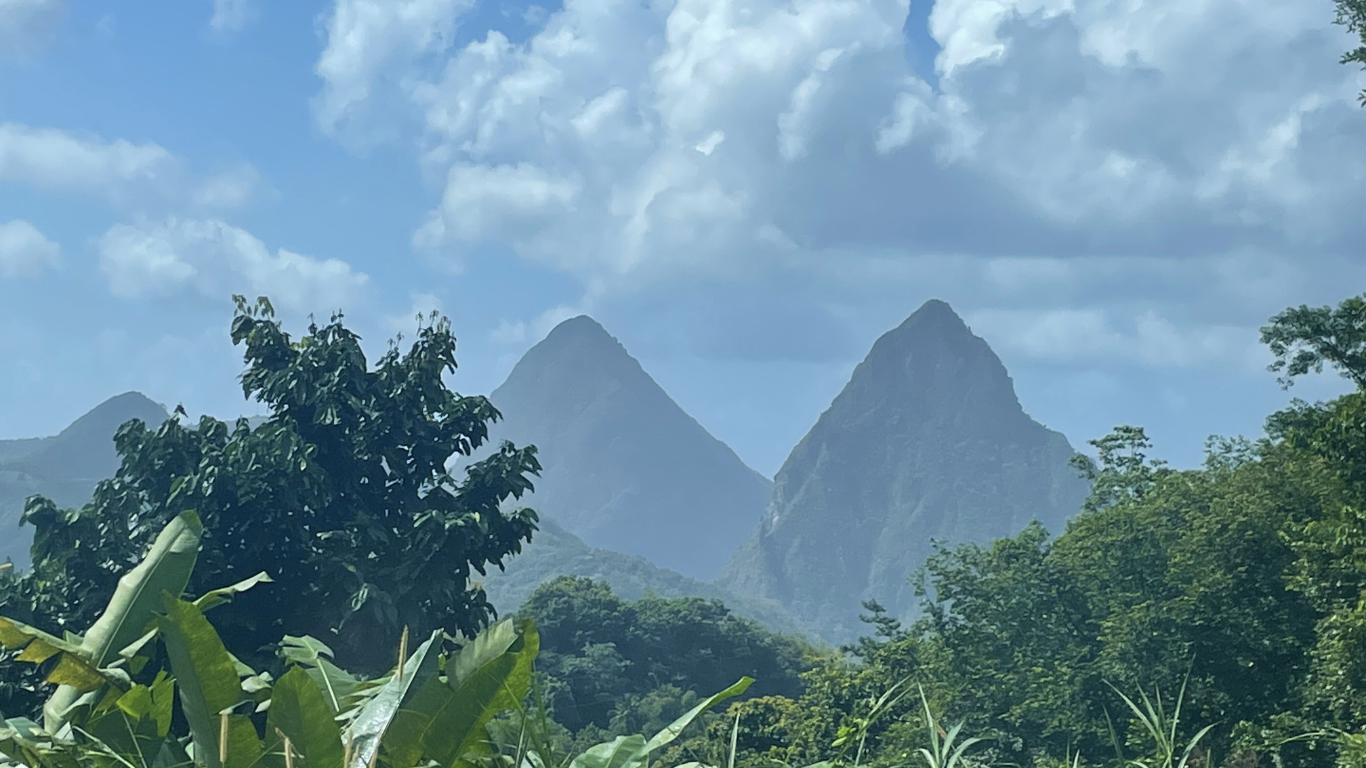
Among its most iconic landmarks are the Pitons, two volcanic spires rising sharply from the sea, and nearby the Sulphur Springs, often described as the world’s only drive-in volcano. Rick loved the mud bath there, and thanks to that experience, this became his favorite day of the trip. The Caribbean fishing villages we passed along the way felt picturesque.
After the decline of the sugar industry, St. Lucia came to depend heavily on banana exports. Our guide walked us through the life of the banana plant and the workings of the industry. Today, bananas remain part of the economy, though tourism has become the dominant source of income.
The island is also rich in fruit diversity, including many varieties of mango, a detail that echoed across several of the islands we visited.
We were told that the country, like many small island states, faces challenges with brain drain, as young people often study abroad and do not always return.
While in Dominica we saw Carnival participants making their way to festivities, in St. Lucia we learned that Carnival unfolds over many days, a sustained celebration that demands both energy and endurance.
Grenada
Grenada is often called the Spice Island. Our guide stopped in many places, inviting us to buy spices sold by local women along the roadside. The country grows nutmeg, cloves, ginger, and cinnamon, among others. Nutmeg, in particular, stands at the heart of Grenada’s identity.
In recent years, however, the nutmeg industry has declined, largely due to the devastation caused by hurricanes, especially Hurricane Ivan in 2004, which destroyed a large share of the island’s nutmeg trees. As in St. Lucia we learned about bananas, here we were introduced to the life of nutmeg.
Another part of Grenada’s story is its political history. In 1983, following an internal power struggle after a revolution, the United States led a military intervention on the island, an event that still shapes how Grenada is remembered internationally.
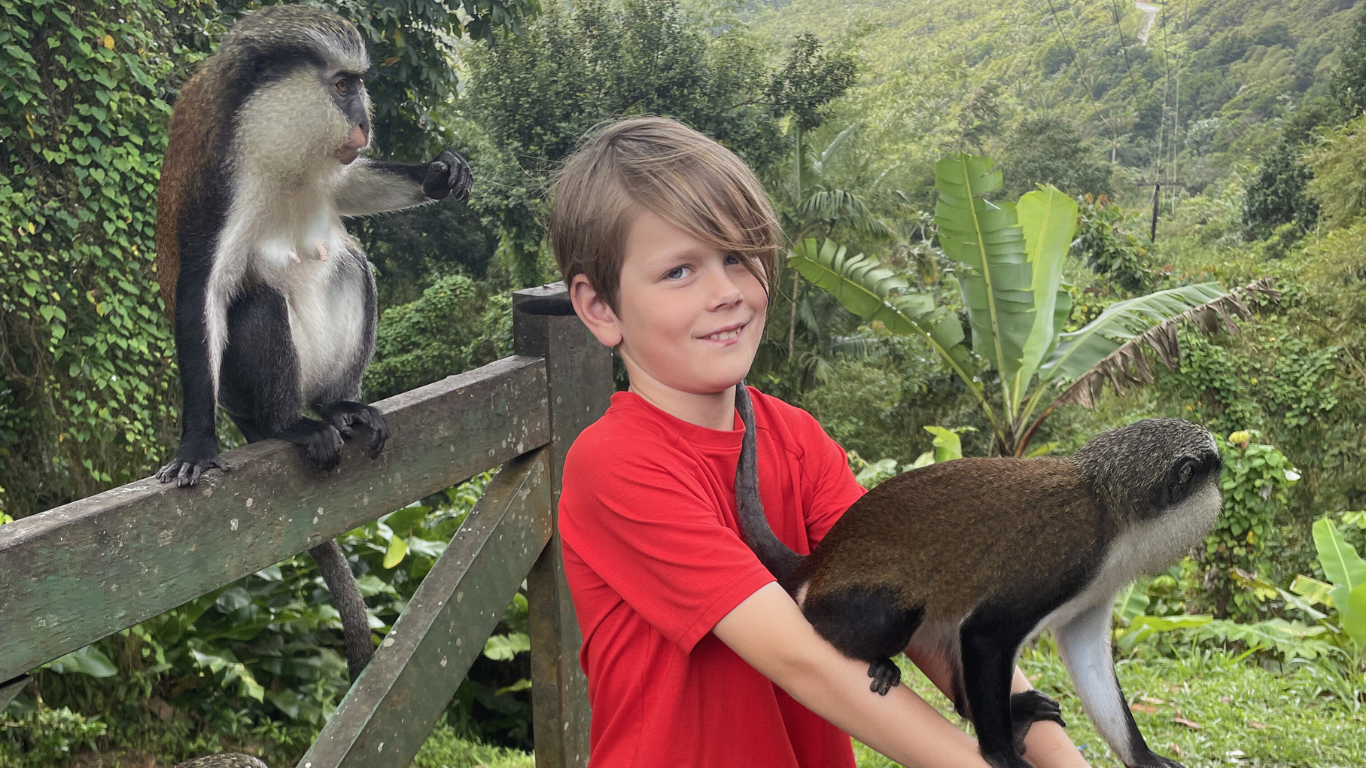
For Rick, the highlight here was the monkeys. Monkeys were not native to these islands but can now be found on some of them, including Grenada. They are believed to have been brought by colonizers, likely as pets and possibly also as a food source.
Another plant introduced during the colonial period was breadfruit, brought from the Pacific as a cheap and filling food for enslaved people. Today, it is well established on the island and widely appreciated as part of local cuisine.
Barbados
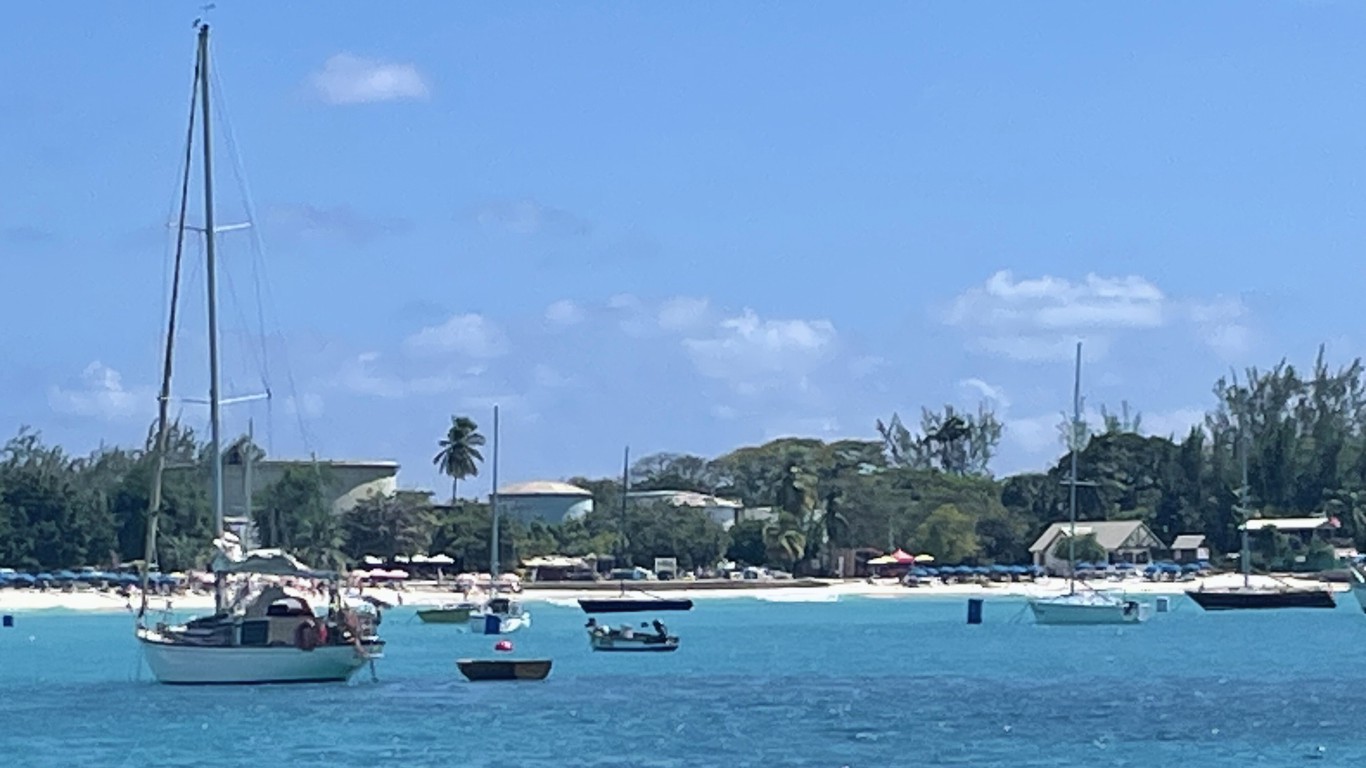
Instead of a bus excursion, we chose a catamaran trip in Barbados, and it turned out to be one of the highlights.
We snorkeled with Rick among schools of fish, no turtles that day, then stretched out on the catamaran nets, letting the waves carry us. The crew was warm, the atmosphere easy. We sailed along the coastline of Bridgetown and stopped at a stretch of stunning turquoise water where we could slip straight into the sea. The sand was white and impossibly fine.
All the islands offered beautiful beaches, but those of Barbados felt especially vivid, a deeper blue, more open, more inviting.
Barbados is also known for its rum industry. While rum is woven into the history of many Caribbean islands, it takes on a particular significance here. Barbados is often considered the birthplace of rum, with a distilling tradition that dates back centuries.
We saw flying fish, the national symbol, and heard often about Rihanna, a source of pride for the country.
Located outside the main hurricane belt, it has developed a strong tourism sector alongside offshore financial services, making it one of the more economically stable “siblings” we encountered.
What stayed with me
Moving between these islands, I kept thinking about how differently a shared history can unfold.
Each carries the imprint of the past, and yet each has shaped it into something of its own.
What stayed with me most was the way people speak of their islands as something whole, something theirs. A pride that felt generous and unforced.
Perhaps that is what siblings do. They grow in different directions, and yet something invisible continues to bind them.
Leave A Comment