
Updated: 5 months ago
If you are looking for eco-friendly grocery shopping tips for beginners, here are simple changes that worked for our family—from buying in bulk to reducing plastic and choosing local options.
Quick Tips for Eco-Friendly Grocery Shopping
- Buy in bulk whenever possible to reduce packaging
- Choose products with less or no plastic packaging
- Prioritize organic and locally sourced food
- Bring your own reusable bags and containers
- Reduce imported food and favor seasonal options
- Look for glass, carton, or reusable packaging alternatives
- Start small and aim for progress, not perfection
This post may contain affiliate links. If you purchase through one of these links, I may earn a small commission at no additional cost to you. You can read more in my Disclosure Policy.
Why This Felt So Overwhelming at First
For a long time, I postponed transitioning to more eco-friendly grocery shopping. Somehow, it felt more overwhelming than the other areas of life I had already begun to change.
And yet, I knew this was one place where our family could make a real difference.
Everything shifted when I looked at our plastic footprint. This was part of a broader shift I had already started at home, especially in how we reduce everyday waste. Seeing how much single-use plastic we were bringing home each week was unsettling. It made it clear that we were far from practicing sustainable grocery shopping.
Part of the hesitation was practical. In our family, my husband usually did the weekly grocery shopping. Moving toward more eco-friendly habits would mean that he needed to be fully on board.
As for me, I would need to step in more—taking on additional planning, effort, and time. I also feared that shopping more sustainably would mean visiting multiple stores and increasing our food budget.
But in reality, the transition turned out to be smoother than I expected—though not without challenges.
Below are the changes we introduced and what we learned along the way.
Buy in Bulk to Reduce Plastic Waste
Reducing our plastic footprint was an important part of our transition toward more eco-friendly grocery shopping. To cut down on single-use plastic, I wanted to start buying more food in bulk. This quickly became my number one tip for beginners. It also made me reflect on how much we actually need—and how easily we accumulate more than necessary.
The supermarket where we had been doing our weekly shopping did not really allow for that—except for mostly non-organic fruits and vegetables, as I mentioned in my post on water conservation. Organic produce, I learned, is often wrapped in plastic to distinguish it from non-organic options.
So we tried another grocery store, Migros, in a neighbouring village, which offered a wider selection of organic products in bulk. It is a bit more expensive, but my husband and I decided we were ready to reduce our plastic consumption—even if it meant spending slightly more to shop in a more environmentally friendly way.
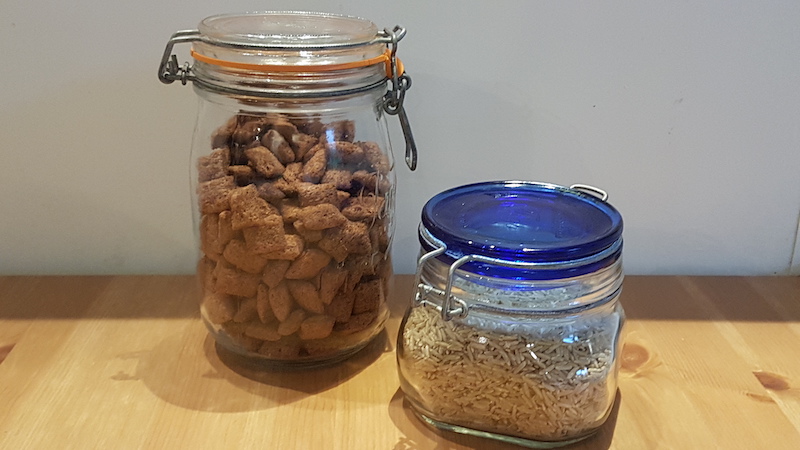
Below are breakfast cereals and some rice I bought there in reusable glass jars.
Unfortunately, the bags that Migros offers for bulk food are made partly from paper and partly from plastic. This discovery dampened my enthusiasm for doing our weekly eco-friendly grocery shopping there.
Purchasing groceries with less packaging
When products were not available in bulk, I tried to choose larger-size items to reduce packaging. It also tends to be more economical. My husband had already been doing this to some extent—he is naturally good at optimizing. I, however, had to consciously develop this habit and move away from my short-term thinking when grocery shopping, as I reflect on more in my post on greener laundry.
Eco-friendly Grocery Shopping: Choose Organic Products Where Possible
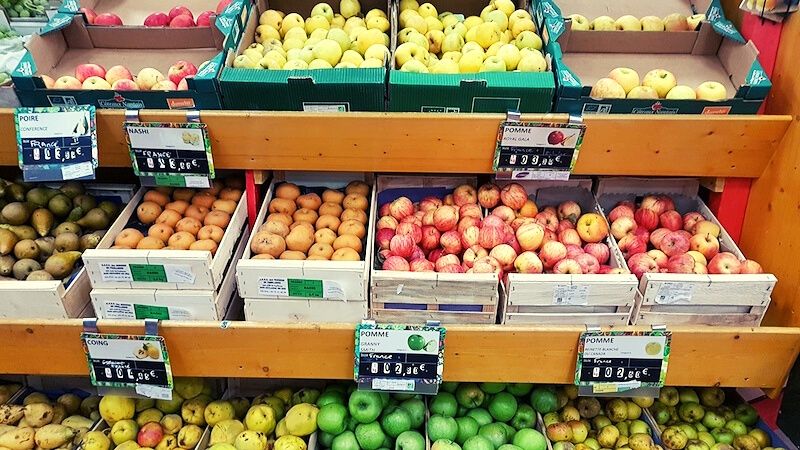
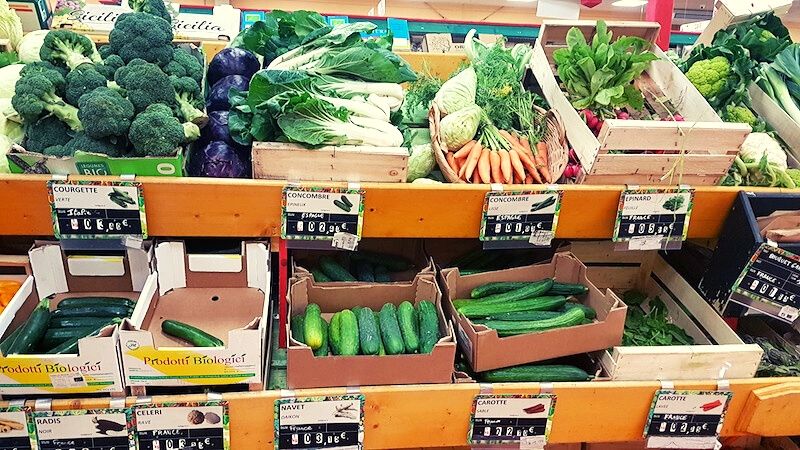
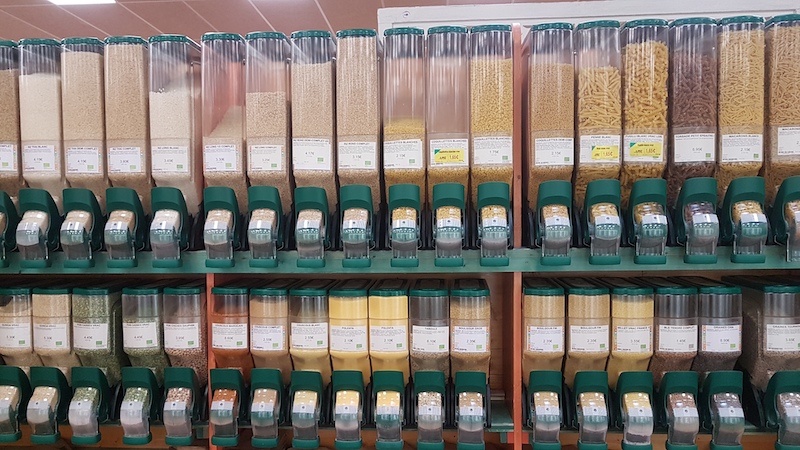
Disappointed by the amount of single-use plastic at Migros, I decided to give another try to a French organic grocery store, Satoriz. The photos in this post were taken there.
We had tried shopping at Satoriz once, maybe four years ago. At the time, the selection was limited and prices were high, so we abandoned the idea of eco-friendly grocery shopping there. With small children, we preferred to shop in one place to keep things manageable.
We are lucky to have a Satoriz close to Migros, so switching to this organic store did not require extra travel or increase our CO₂ emissions. This time, both my husband and I were pleasantly surprised. We found everything we needed, and bulk products could be placed in paper bags. The selection had improved significantly over the years and made sustainable grocery shopping feel like a realistic option for us.
Choosing organic wherever possible became my second priority when trying to shop more sustainably.
How We Felt About the Change
At first, our oldest son Lev was not happy—he wanted to go to our usual, less eco-friendly grocery store. But his mood quickly changed when he discovered he could scoop and bag his own breakfast cereals and use tongs to pick out cookies for the week. Buying in bulk made the experience more interactive, and the children began to enjoy grocery shopping more.
Lev still misses some of his favourite yogurts and cheeses that we could not find at Satoriz, so we agreed to occasionally buy those from Migros.
I also have to admit that switching stores unsettled me a bit. I did not like the orange juice as much, and I undercooked their pasta before realising it needed more time. Some products also seemed to have a shorter shelf life. But I tend to feel slightly disoriented whenever I change grocery stores, so I see this as part of the adjustment process—learning new habits, tastes, and rhythms.
Buying Alternatives to Plastic Packaging
Although Satoriz uses less plastic than most large grocery stores, some of its organic products are still wrapped in plastic. In addition to choosing larger sizes, I also had to learn to look more carefully for alternatives.
We started opting for milk in cartons, juice in glass bottles, and prepared food in glass jars. Some items we still buy in plastic—mainly processed foods such as soya-based nuggets or cordon bleus. The selection of yogurts in glass jars is also not as extensive as we would like. For that, my husband even suggested buying a machine to make yogurt ourselves.
Reduce Imported Food When Possible
Some habit changes in our way towards greener grocery shopping came with a bit more struggle. I noticed a similar pattern when trying to change other daily habits—some shifts feel easy, others take much longer to settle.
Grandiose as I can be, I initially set a goal that we would not buy food from other continents at all. I quickly realised that this was far too ambitious for our family. My husband was very clear—he is not ready to give up his beloved chocolate, and, truthfully, neither am I.
I also grew up without bananas and tangerines, as they were not readily available in the Soviet Union. I did not want to deprive my children of fruits they love.
So we chose a more moderate path. Whenever possible, we try to select products grown or produced nearby. At the same time, we limit ourselves to one purchase per week of fruit from other continents.
Going zero-waste remains an important aspiration—but this is what we can manage for now. Progress not perfection.
Reducing Disposable Bags – Bringing My Own for Fruits and Vegetables
I did not want to stop shopping at Migros because of their disposable bags. So I brought reusable paper bags from our old grocery store with me.
Unfortunately, at Migros, customers have to weigh their fruits and vegetables, and the small price stickers did not stick well to already-used paper bags. As we decided to alternate between Migros and Satoriz going forward, I will try using cotton reusable bags similar to these next time and see whether the stickers hold better.
Buying Local Organic Produce with Minimal Extra Transport
I had often heard about weekly fruit and vegetable baskets delivered directly from local farms. However, I had never really explored whether this was an option where we live. In general, I had never ordered groceries for home delivery. While some consider food delivery a more eco-friendly option, others point to the additional packaging it can involve.
I checked whether Satoriz or Migros offered such services, but neither does.
Looking for alternatives, I turned to local farmers as a way to shop more sustainably—and discovered a couple of options nearby.

One of them offers fruit and vegetable baskets, while the second—called CAEC Le Jardin des Fées (in English “Fairies’ Garden) —focuses mainly on vegetables. They had a beautiful table filled with different types of pumpkins, from which I also chose one.
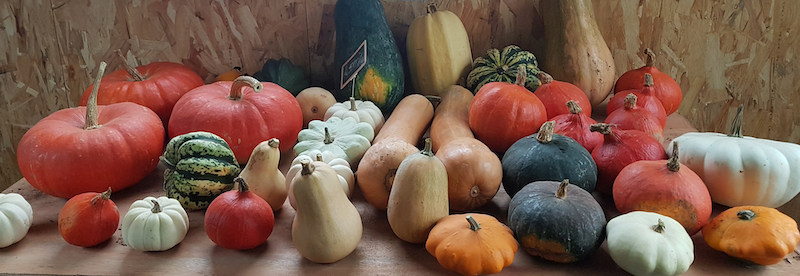
Both farms do not provide home delivery though—those who sign up need to pick up their baskets on specific days in nearby villages.
I did not want to increase our CO₂ emissions by making an extra car trip just for that purpose. So it took me some time to choose the most convenient pick-up point—one where I could combine it with other errands.
There is also the element of surprise: you cannot choose the contents of the basket. That means sometimes receiving vegetables that neither I nor the kids are used to. It requires extra effort to learn how to prepare them in a way the children will enjoy.
Highlights
One of the strongest feelings I experienced this week was what I can only call eco-joy—seeing our first plastic-free, locally sourced organic vegetable basket and shopping for bulk products at Satoriz.
It also led me to discover vegetables I had never cooked before and sparked a renewed desire to improve my cooking. If you have favorite vegetable recipes, I would love to hear them.
And I am more convinced than ever that…
Genuine well-being is only possible when we live in harmony—with ourselves, with others, with God/Universe/Higher Power (or however you choose to name it), and with our planet.
For many years, I have been fortunate to live a serene and happy life—nurturing my spirituality, loving myself, and building meaningful relationships. Yet over the past months, deepening my relationship with our planet has opened a new layer of inner peace, expanded my sense of serenity, and strengthened my overall well-being.
Reflections from 2026
We now live in California, and instead of French and Swiss grocery stores, we shop at Whole Foods, Safeway, and Trader Joe’s.
Looking back at the changes we introduced in 2019, I see a mix of what stayed and what slowly faded. On the positive side, we still prioritize organic food and have become regular customers at Whole Foods.
In France, we truly embraced the habit of receiving a local organic vegetable basket—it stayed with us for years. Yet after moving to the US, we have not looked for a similar option here.
My husband now shops with around ten reusable bags, but we quickly dropped the habit of reusing paper bags for fruits and vegetables, already back in France.
I also have to admit that my goal of buying only one imported fruit per week did not last. These days, we choose fruit more freely—often guided by the preferences of our youngest, who needs daily snacks for preschool.
I still try to choose glass over plastic whenever possible, although I have to confess that this is sometimes driven as much by my concern about microplastics as by environmental considerations.
Like then, my motto remains: sustainable grocery shopping is not about perfection—it is about finding what works in real life.
And I continue to see grocery shopping as one small but meaningful way of returning, again and again, to living awake.





I am also a user of a local vegetable scheme – I pick my bag up once a week at a nearby community centre (5 min walk from home and on my cycle commute route anyway). Most of what we get is as locally grown as possible (a bit of a challenge in winter in the UK though so there is some stuff imported from continental Europe), to the extent of salad grown in the local parks and churchyards of our borough.
I have met and befriended a lot of new vegetables in the 6 years of using this scheme – who knew that “spring greens” and “winter greens” were actual plants? Fortunately the scheme also has a website with recipes that you can filter by the veg you need to use up – check out https://www.growingcommunities.org/our-recipes for some ideas. Although knowing what little I know about kids, I can’t really imagine a child consenting to eat any of these things 😀
Thank you Kitty for sharing about your experience! I am impressed how they are using urban parks and churchyards for growing salads, I hope also other cities will take this road. And I so relate to discovering new veggies through such themes – with few weeks I already had to face the challenge to use black radish and Swiss chard, vegetables I never used before in the cooking. Thank you also for sending the link to recipes – I need new ideas, indeed as I feel my cooking skills are not up to the level to use all these vegetables! For kids, what I have found is that I put many different veggies and make them into little pieces. Some of these they eat without a problem like that and they also have the opportunity to choose one ingredient and to leave it for me:-)
So inspiring!!
Except on a few occasions, I do my fruit and vegetable shopping at the farmers market only. I go there with a big backpack and there’s no plastic anymore, eventually some paper bags for little stuff. We normally only buy seasonal and local fruit and vegetable but there are a few exceptions, as you say: progress not perfection.
Thank you Maya for your comment! I have not yet been here in the neighbouring village in farmers market, but will plan to do it when the veggie baskets system is on break from January to April, I think.
Thanks for sharing. Our normal big supermarket store has started to sell things like rice/etc. in Bulk – bid of a hidden section but worth trying as to support the initiative, and I have found that stores start to do a full “bio section” which I personally appreciate. Another challenge is that my favorite Organic store is not stocking some basic things I love (like a specific orange juice) so I guess I prefer shopping at another place. Unsure where the right balance is.
Thanks Jim for your feedback! I agree and I also miss sometimes when I shop in an organic supermarket some of the things from the regular one. And yes, for me it is also about finding the right balance.
👍👍👍
Thank you Viive!
I’m always looking for ways to be more eco-friendly when grocery shopping. Buying organic produce is a top priority for me. I just wish there were more options to purchase from. Thanks for sharing these helpful eco-friendly shopping tips.
Thank you for reading! I agree, having access to more organic and sustainably produced food would make these choices much easier. I have found that availability can vary enormously depending on where we live. What I try to remind myself is that eco-friendly shopping is not only about buying organic. Reducing food waste, choosing seasonal produce, buying only what we need, and bringing reusable bags can all make a difference too. Every small step counts.