
If you’re looking for simple ways to make your coffee and tea habits more eco-friendly, these are the changes I tested—what worked, what felt difficult, and what actually lasted.
A few years ago, I decided to rethink my morning routine and move toward more eco-friendly coffee and tea habits. After a turbulent week of trying to green our daily movements, I felt that I needed some change that would not shake our routine quite as much.
And indeed, this week unfolded much more smoothly.
7 Easy Habits for an Eco-Friendly Coffee and Tea Routine
I implemented the following changes to make my coffee and tea habits more eco-friendly and reduce everyday waste:
- Buying a travel mug and French press to avoid using Nespresso machine to reduce single-use waste.
- Brewing coffee with my new French press
- Buying loose tea instead of tea bags
- Bringing my own containers when shopping loose tea and coffee
- Buying organic bulk coffee
- Carrying my reusable mug daily with me
- If I don’t have a travel mug with me, I try to drink coffee in the shop, instead of taking it to go—or at least skip the lid.
Preparing at Home for an Eco-Friendly Coffee and Tea Routine
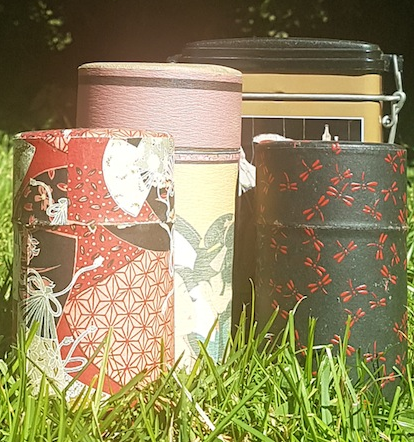
At home, I rediscovered the empty coffee and tea containers that had been tucked away on the highest kitchen shelf. Over time, my reliance on tea bags and Nespresso capsules had pushed them out of daily use—despite how beautiful they are.
I had known for a while that Nespresso capsules are difficult to recycle, even though Switzerland offers dedicated collection systems. I reassured myself that choosing aluminum capsules and recycling them made it “not so bad.”
But then I learned something that stayed with me: many tea bags also contain plastic. If I wanted to move toward more eco-friendly routines, I would need to rethink my consumption of hot beverages in general.
Choosing Reusable Coffee Equipment
In the spirit of combining errands, I went with my two little ones to buy what I needed to shift toward more eco-friendly coffee and tea habits.
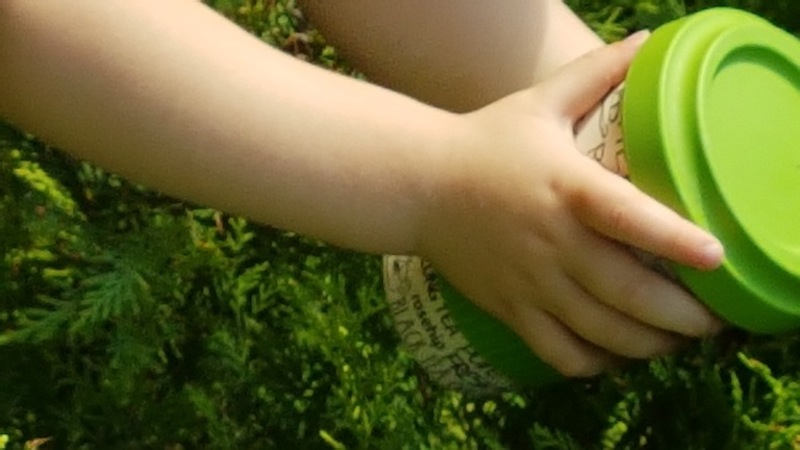
We have a wonderful kitchen shop nearby, where I found a French press and a travel mug. Max chose the mug—and I think he did a very good job. Rick loves it too.

Shopping for Organic Bulk Coffee
Recently, I learned that the type of coffee I buy also matters from a carbon footprint perspective.
I wanted to choose organic coffee without unnecessary packaging, so I went to our local eco store, Satoriz. It did not disappoint. They offered several blends and had a machine to grind the beans on the spot—something my boys were fascinated by.
Interestingly, the container I had brought with me remained unused, as the store required their own bags for weighing. Still, I can reuse the same bag next time, which felt like a small step in the right direction.
New eco-friendly coffee habits introduced—and, overall, mission accomplished.
Brewing My Eco-friendly Coffee at Home with a French Press
Switching to a French press turned out to be easier than I expected. It does take a bit more time, but not enough to disrupt my routine.
I do sometimes miss the café latte I used to make—the taste is different with a French press. But I am still experimenting with the balance of milk, water, and coffee, and by the end of the week, I had already found a version I truly enjoyed.
And of course, I can still enjoy a latte at a café—or take one with me in my reusable mug.
Using My Reusable Travel Mug
The first time I brought my own mug to a café, it felt strangely uncomfortable. Asking the staff to fill it made me self-conscious, and I found myself wondering why.
I think it was because I was one of the few doing it. While others chose paper cups, I stood out.
But it also felt like something deeper.
It brought back memories of my childhood—the deficit years in the Soviet Union and the early years of independence. When we traveled, my family almost always brought our own food. Eating in cafés was rare. As a child, I envied those who could order freely and felt embarrassed taking food out of my own bag. It made me feel different—less than.
Perhaps some trace of that feeling has stayed with me.
Even now, when I take something out of my bag in a café—even just a mug—I notice a flicker of that old discomfort. I explore the lasting impact of those years of scarcity more deeply in my reflection on minimalism and the weight of enough.
And yet, to my surprise, no one seemed to mind. The waitress was not shocked at all—I was clearly not the first to do this.
As the day went on, and I used my travel mug again and again, it began to feel natural.
Challenges: My sit-in coffee experience
Before I had bought my travel mug, I started the week by trying something simple: drinking my coffee in the café instead of taking it to go. I chose Columbos café in the Vitam Park centre before heading with my family to the indoor playground.
To my surprise, they did not offer ceramic cups for customers sitting in. Coffee was still served in paper cups. The only ceramic cups available were for espresso—so my husband was the lucky one.
I appreciate that in my region, café staff no longer automatically put plastic lids on cups. They simply pointed to where I could find one if I wanted. So I did not have to refuse it: I just did not take one.
My husband and I wondered why larger ceramic cups were not used. By accident, I may have found the answer.
I had had a short night and was tired. When clearing our tray, I accidentally threw away my husband’s espresso cup along with the rest of the trash. When I apologized and tried to retrieve it, the waitress smiled and said not to worry—she was used to it.
Maybe that is why ceramic cups disappeared.
Keeping Up with New Habits
I feel that many of the changes I introduced—during my week of water conservation or when I focused on my daily movements—are slowly becoming part of my life. And yet, there are still some I struggle with.
When it comes to water, the hardest habit is to stop washing dishes under running water. When there are only a few items, I still feel the urge to do it quickly and move on.
The same goes for greener commuting. One morning, it was cloudy and slightly rainy, and I did not feel like taking Max to his baby gym by bike. I even asked my husband to confirm that it was raining—hoping to justify taking the car instead. Max, however, had other ideas. So we went by bike. It did not rain. And it turned into a beautiful moment for both of us.
Over the past weeks, I have also felt moments of discouragement—what Leo Babauta calls Phase 2 of How Shift Happens in Our Lives. I felt tired, overwhelmed, and pulled in many directions. Without having committed to this journey—and without sharing it here—I suspect I would already have slipped back into old habits, practicing green living only “when I have time.”
But doing this with you has helped me stay on track.
Respecting Each Person’s Journey
In general, my children are embracing our more planet-friendly lifestyle. Still, not every moment is easy.
One day, my oldest son Lev was tired when I came to pick him up from school on foot, with his scooter. He told me quite clearly that he did not want to help the planet—and that he would prefer to be picked up by car.
My husband, too, has his own preferences. He loves Italian espresso and has a deep attachment to his morning ristretto. I knew from the beginning that the French press would not replace that for him—and I respect that he continues to use our Nespresso machine.
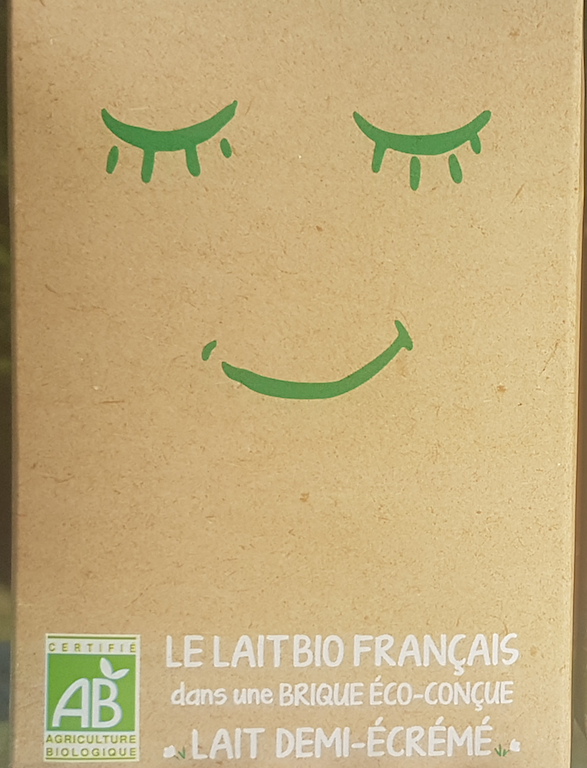
And yet, I can see the shift happening. Recently, he mentioned that he would like to switch to a coffee machine that does not rely on capsules. And after a recent trip to the store, he came home delighted to share that our supermarket now offers organic milk in more environmentally friendly packaging.
Going Green—and Social Media
Before starting my journey toward greener living, I used Facebook only occasionally and rarely checked LinkedIn. I was not often on my phone or computer when my children were around.
To share more of this journey, I opened Twitter and Instagram accounts. It took time to find my way—especially with Instagram—and I soon found myself spending much more time online than ever before.
A few days ago, while I was again on the computer, Lev came up beside me, took it away, and said:
“I do not want you to work for the planet. I want you to work for your children.”
That stayed with me.
It made me realize how careful I need to be. Not only in how I live sustainably, but in how I show up for my children. It is important to be honest with myself—and with them—that it is not “for the planet” that I am on my computer so much, but my own lack of discipline with social media.
A Small Lesson from the Week
One insight stayed with me:
Change—but with reason and measure.
Although I decided to move away from tea bags and switch to loose tea, I did not rush to buy anything new, nor did I throw away what I already had.
One of the deeper changes I am working toward is consuming less—and only when it is truly needed.
So I will use the tea bags I have first. And only then will I move on.
Reflections from 2026
Looking back and taking stock of which habits have truly settled into my life over the years, I see a mixed picture.
On the positive side, we are still drinking organic coffee. Although my French press habit did not last, and thanks in part to my husband’s growing ecological awareness, we moved away from Nespresso. For several years now, we have been using a coffee machine that grinds the beans and makes fresh coffee.
Some changes, however, did not take root. We have not yet fully transitioned to loose tea. And when my beautiful reusable mug broke, I replaced it—but never quite liked the new one as much. Instead, I developed a different habit: making coffee at home and taking it with me in a regular mug.
I still occasionally buy coffee to go in paper cups—and yes, I sometimes use lids. Thankfully, they are now often made from recyclable materials.
I am still learning.
I will keep trying to do better—but gradually, and with moderation, without beating myself up.
This, too, is part of my journey: returning, again and again, to living awake.



Thanks for sharing all your experience. I have learned, that I can use the same tea up to 3 times. Green, black or white tea normally are infused for about 2 minutes only. There’s a lot of information on the web about how to do it properly. That way, I have diminished quite a bit my tea leave consumption. Used grounded coffee beans and tea, either bags or loose, are an important asset to your compost.
Thank you Maya for your comment and suggestions, I will try to implement both tips! I just installed the compost pin in the kitchen and will start to put then grounded coffee and tea there as well.
I’ve been eating lunch at my daughters place the other day and she had no coffee. There’s a place next door, where I could have gone to grab a coffee but my daughter didn’t have an appropriate cup I could have used. So I was a little ashamed to show up with a normal mug and dropped the idea. However, I will go through my cups at home and carry one with me when on my way. Thanks for having brought this up.
Hi Maya, thank you for sharing this moment at your daughter’s place! I forgot my reusable one also sometimes – if I have time, I try to then have sit-in coffee and sometimes I do take a single use paper one…Progress not perfection. And thank you for sharing how you felt about showing up in a mug different from ordinary customers – I also get that feeling of shame sometimes about being different. But it is interesting that often the staff who serves coffee are so cool and supportive when you go with a different mug.
Hi Nika, I liked a lot your post and your reflexions on Greener coffee habits made me realize the huge amount of waste I was generating by buying take-away coffee. So in fact I have stopped that altogether and try to only drink within the shop when ordering coffee now (in good old ceramic), thank you for that! The worse is they would often give you plastic and wood straws, tossed within 30sec to the garbage so I am a bit more eco-friendly now! Continue on the changes and being an inspiration 🙂 Jim
Thank you Jim for your comment! I am glad to hear that you have been able to change your coffee and tea habits to be more eco-friendly now. Your change is also inspiring me! This encourages me a lot when I have moments of doubt or I feel less enthusiastic about all the change involved in going green.