
Updated: 4 hours ago
I have had a love-hate relationship with meditation.
When someone first suggested I try it twenty-five years ago, I was pretty much tabula rasa. I had no real prejudices about the practice. I certainly had no idea how to meditate properly—or whether there even was a proper way to do it. To be honest, in my teens and early twenties, nobody in the circles I moved in really meditated. I don’t think meditation was even part of our vocabulary.
Buddhist Meditation
When I moved to Paris, quite a few of my friends meditated.
I will never forget my first attempt, with a Buddhist meditation group. A friend had convinced me to come along, and there I was, trying to sit still on a cushion, when suddenly an enormous restlessness came over me. I couldn’t stay there another minute. My whole body ached. My insides were boiling. I hated every second of it.
Afterwards, I remember running through the streets of Paris—in high heels—trying to get rid of the strange pressure that had built up inside me while I was attempting to sit peacefully and meditate. Not exactly the serenity I had been promised.
After that, I was rather skeptical that meditation and I would ever have much of a future together. I was simply too restless for this ancient practice. Not for me.
Yet my friends kept talking about meditation and how it had magically changed their lives. So, following my FOMO, I eventually decided to give it another try.

Running Around Oxford
That happened when I was studying in Oxford.
A friend there, having heard about my disastrous first attempt, suggested that perhaps I shouldn’t try so hard to sit still. Why not incorporate meditation into something I already loved doing—running?
She suggested connecting a simple phrase to my breathing. Every time I inhaled, I would think: God in. And every time I exhaled: Nika out. The idea was to grow my faith, deflate my ego and calm my racing thoughts.
And strangely enough, it worked. There I was, running through the parks of Oxford:
God in. Nika out. God in. Nika out.
For a while, I had found my way to meditate.
Christian, Ayurvedic and Transcendental Meditation
When I moved to Geneva, meditation seemed to be everywhere again. Some of my friends practiced Christian meditation. Others were interested in Ayurvedic practices. Others swore by Transcendental Meditation (TM).
I never took the official training for TM, although I did experiment with Christian and Ayurvedic practices. But I kept running into the same problem I had encountered in Paris: I wasn’t very good at committing to practices that required me to sit still for long periods of time.
Eventually, I became a little defiant about the whole thing. Why did meditation always have to look like this?
Dancing and Walking My Puppy
By my early thirties, I had begun discovering something interesting. Some of the states I had been trying so hard to reach through formal meditation came to me quite naturally when I was doing completely different things.
Dancing was one of them. Sometimes, while dancing, I would get close to a trance-like state where my mind, my body and my surroundings seemed to melt together. For a little while, there was nothing to think about. I was simply there.
And then there was Fleur, my puppy. I can still picture her running madly in circles at the park or leaping like a rabbit after a ball. Watching her, I sometimes felt an extraordinary happiness and serenity. Those moments are still etched in my mind. Maybe I wasn’t quite as incapable of meditation as I had thought.
Mindfulness
I was also introduced to mindfulness while living in Geneva. I tried Mindfulness-Based Stress Reduction and, while pregnant with my first baby, mindfulness-based birth preparation.
I could see the value in both, but neither made me stick with a regular mindfulness practice. Something still felt missing for me. Over time, I realized that I was looking for something more explicitly spiritual—a practice that connected me not only to the present moment, but also to something larger than myself.
Hypnobirthing and My Two Natural Births
During my first pregnancy, I discovered hypnobirthing and the Mongan Method. I ended up using it to prepare for all my pregnancies. Every day, I listened to guided hypnobirthing meditations. I found them deeply soothing and empowering.
But nothing came close to the trance-like state I experienced while giving birth naturally to two of my sons, particularly the first time. It looked nothing like the birth I had imagined. I wasn’t lying serenely in a birthing pool, calmly breathing my baby into the world.
I was dancing.
I had headphones on and my birth playlist playing. Sometimes I danced around the room. At other times I was on all fours in the pool, while my husband and midwife tried to make sure my phone didn’t end up in the water.
And yet it was one of the most transcendent experiences of my life. For moments, time and space seemed to disappear. I felt completely connected to my body and at the same time connected to all the women who had given birth thousands and millions of years before me—and to those giving birth somewhere in the world at that very moment.
I wasn’t trying to meditate. But I had found exactly the state I had been looking for.
Breastfeeding
I loved breastfeeding. And I am deeply grateful that my breast cancer came only after I had been able to breastfeed all four of my children.
Those hours with a baby at my breast could be blissful—the warmth of a little body against mine, skin touching skin, the strange symbiosis of those early months. But I also noticed something else. Part of me was restless. My hand wanted to reach for my phone. I wanted to scroll, read, do something.
Eventually I realized that I had a choice. Instead of escaping those quiet moments through my phone, I could stay in them. Breastfeeding became another opportunity to practice being completely present.

Gardening
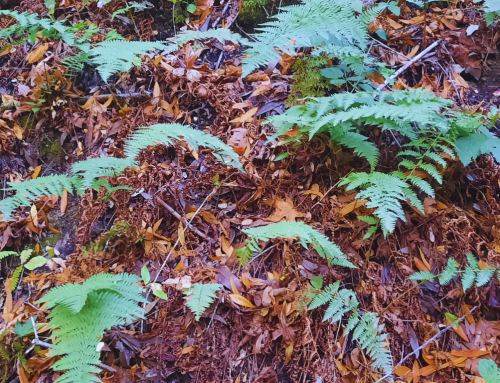
Then we moved to a French village, and I suddenly found myself blessed with a gorgeous, wild garden.
Walking through it every day to see how my plants were doing—and eventually gardening itself—became one of my favorite forms of meditation. My faith has always been strongly connected to nature. Somewhere among the plants and soil, I felt closer to God.
Again, meditation had slipped into my life without requiring a cushion.
Yoga as Moving Meditation
I had actually discovered yoga in my early twenties in Paris and practiced it again while living in Geneva. But for years, I treated it mostly as exercise. It belonged in roughly the same category as going to the gym. I didn’t understand its full potential until I lived in Bali.
Even now, if I close my eyes, I can take myself back to Ubud: practicing under a roof open to the air, looking out at lush vegetation and listening to the birds. There, I finally found myself in flow. I understood what people meant when they talked about yoga as a moving meditation.
I have been lucky to find a wonderful yoga center here in California as well. One of my teachers has one of the most captivating voices I have ever heard. Simply listening to her makes it almost impossible not to feel at one with the universe.
Writing and Painting
These days, meditation often finds me while I am writing or painting. Something peculiar happens. I disappear, and at the same time I become completely present.
The constant chatter in my head quiets down. The big worries and the small irritations disappear. I lose my sense of time. Hours can pass without me noticing.
Maybe this is one of the things I have been looking for all along.
Visualizations and Affirmations
I have also returned to visualization at different moments in my life. I first used it extensively while carrying my babies, as part of hypnobirthing. Over the years, I have created a few secret safe places in my imagination that I still like to visit.
More recently, while dealing with the inevitable rejection that comes with looking for a job and querying literary agents, I have also been listening to daily affirmations by Lavendaire. I have returned to affirmations at different points in my life, particularly when my confidence has needed a little help.
Ecstatic Dance
Given my experiences with dancing—and particularly the trance-like state I experienced during my two natural births—I had long suspected that ecstatic dance might be my cup of tea.
I wanted to try it while living in Bali, but I had a newborn and the classes nearby took place in the evenings, when I had no childcare. But eventually, the universe found a way. One of my good friends in California has been going to ecstatic dance for almost a decade, and she finally took me along.
And yes, it can definitely be my cup of tea.
There is something about surrendering to music and movement that takes me back to those other moments when thinking stopped and I simply inhabited my body. Now that the childbearing chapter of my life is over, perhaps ecstatic dance gives me another way of finding a little of what I experienced while dancing my babies into the world.
So, What Counts as Meditation?
It has taken me twenty-five years to understand that perhaps I was asking the wrong question. For a long time, I wondered why I couldn’t simply learn to meditate “properly.” Now I wonder why I thought I had to.
There is enormous value in established meditation traditions, and I certainly don’t reject them. In fact, I still dream of doing a ten-day Vipassana retreat one day. Several friends have done one and described it as a remarkable experience.
But I no longer believe that meditation has to remain static.
Life doesn’t. Why should the way we find stillness?
Our practice can change with the reality of our lives. When we’re pregnant, meditation might happen through hypnobirthing. With a baby, it might happen while breastfeeding. With a garden, perhaps it happens with our hands in the soil. For someone else, it may be twenty quiet minutes on a cushion every morning.
For me, right now, it is often yoga, writing and painting. In another ten years, it might be something entirely different. Increasingly, I think this is part of what I mean when I talk about living awake—being fully present in the life I am living, rather than constantly rushing through it or thinking about what comes next. Or about the life I might have had.
And after twenty-five years of arguing with meditation, I think I’m finally okay with that.
Do you meditate? What kind of meditation works for you?

Leave A Comment