
Updated: 4 months ago
Turkmenistan remains one of the world’s least-visited and most mysterious countries.
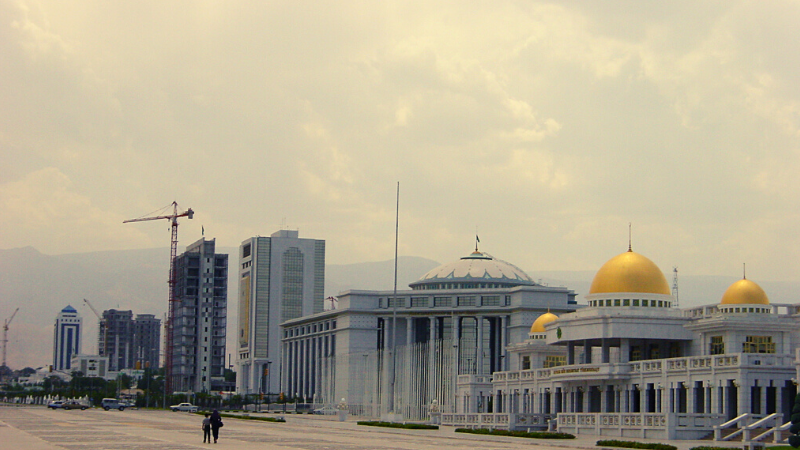
When I moved there in 2004 to work with refugees, I entered a place that often felt suspended between worlds: marble palaces rising from the desert, nearly empty luxury hotels, Soviet habits that had disappeared elsewhere, and a capital city shaped by one of the world’s most eccentric personality cults.
Yet beyond the surreal image that often surrounds Turkmenistan, I discovered something more human and complicated — bustling markets, Afghan refugee communities, women wearing traditional embroidered dresses in everyday life, bread ovens outside apartment buildings, and landscapes unlike anywhere I had seen before.
From the burning Darvaza gas crater to the Caspian Sea and the Karakum Desert, this post shares my personal reflections on living and traveling in Turkmenistan.
Quick Summary: Is Turkmenistan Worth Visiting?
- Turkmenistan is one of the world’s most unusual and least-visited countries.
- The country combines surreal marble architecture, Soviet remnants, desert landscapes, and strong cultural traditions.
- Visiting can feel both fascinating and emotionally complex.
- Highlights include the Darvaza gas crater, Ashgabat, the Karakum Desert, and traditional Turkmen culture.
- The country is still difficult to access compared to many destinations.
- Best for curious travelers interested in unusual destinations and cultural contrasts.
What Makes Turkmenistan So Unusual? The president and the new Ashgabat
When you mention Turkmenistan to people, they often bring up its previous president Saparmurat Niyazov and his peculiarities. For instance, that he constructed a very impressive Ashgabat where one can find palace after palace in marble. These palaces are actually offices for various government agencies.
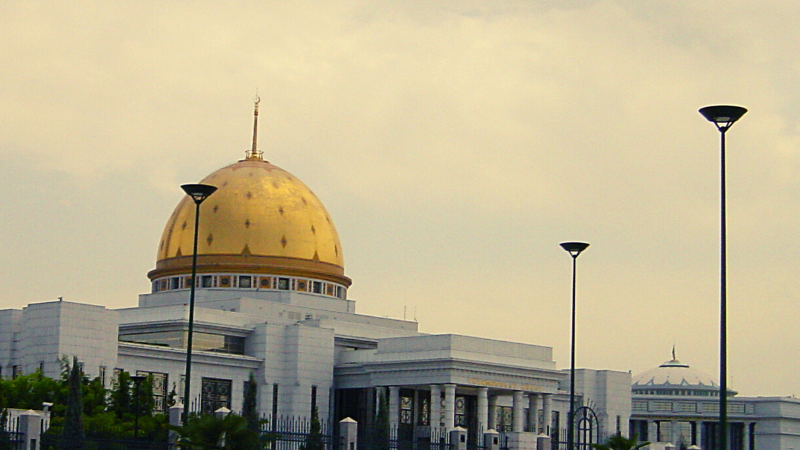
Among these palaces stands this one, the house of the president:
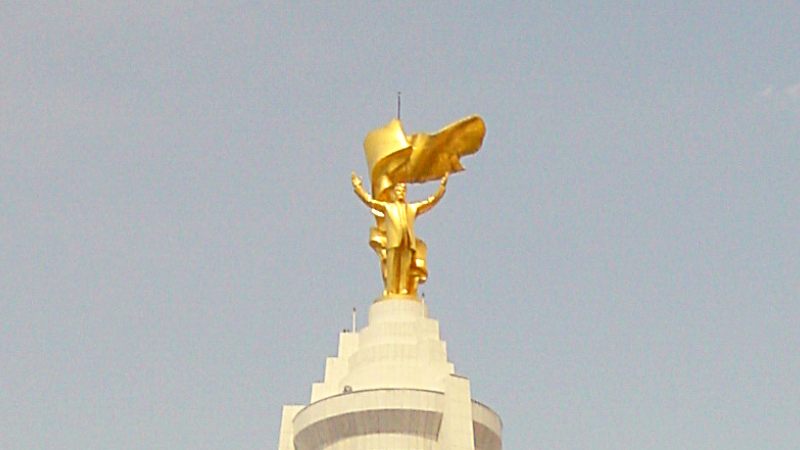
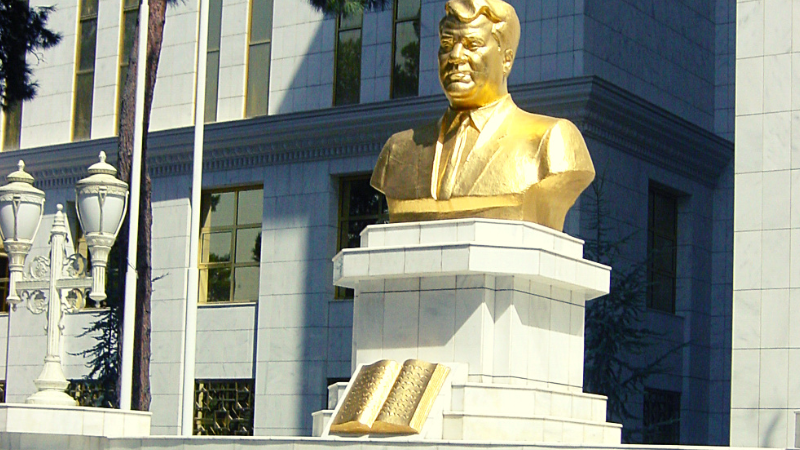
And impressively luxurious hotels where you would find yourself mostly as the sole guest, sitting all alone in their incredibly lavish restaurants. The country was very difficult for tourists to visit at that time, so these extravagant hotels were mostly empty. Another facet of this new Ashgabat was its numerous statues. These have been built mainly in praise of President Niyazov and you can see them on the photos below, without leaving home:
Niyazov rewrote the history of his nation, a book called Ruhnama. It is a spiritual guidance of the nation that all Turkmen citizens had to study.
What Daily Life in Turkmenistan Felt Like
The locals did not go to this marble city much (unless they worked in one of the government offices). I also stopped going to this fancy part of the city after my first visits there as a tourist. The locals’ Ashgabat looked very different. For instance, these were the buildings where I lived during my stay:
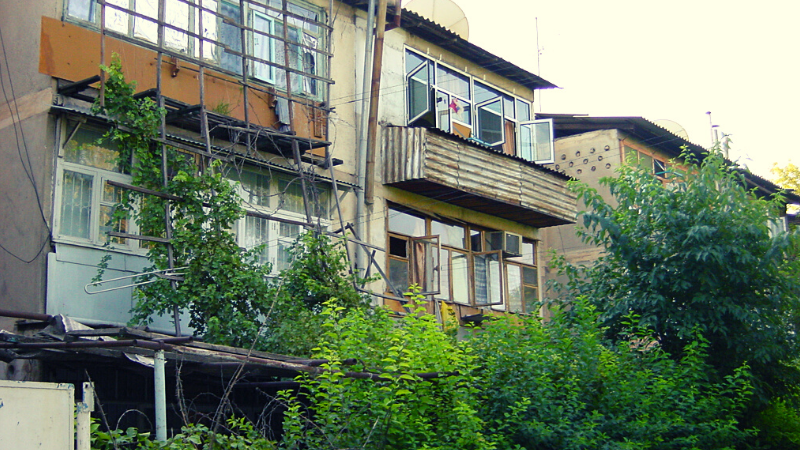
…and…
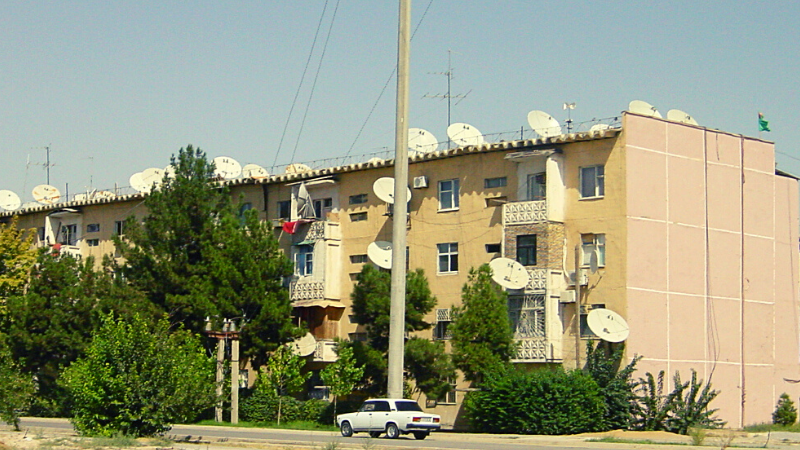
This shows the face of the other Ashgabat. I came to love this old Ashgabat, the incredible markets …
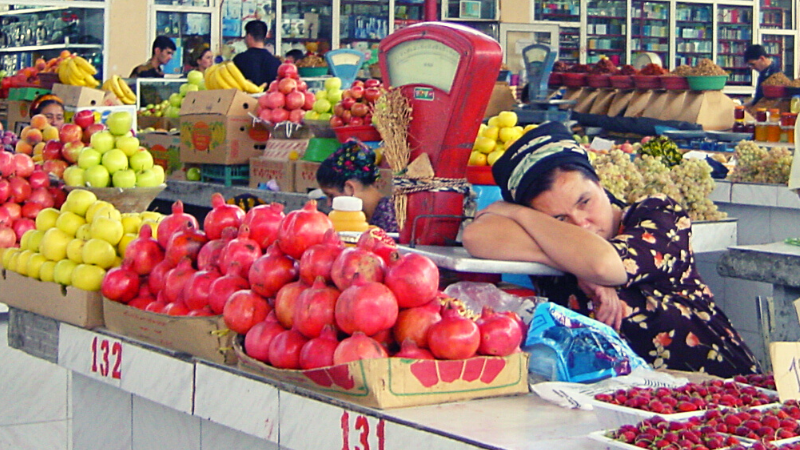
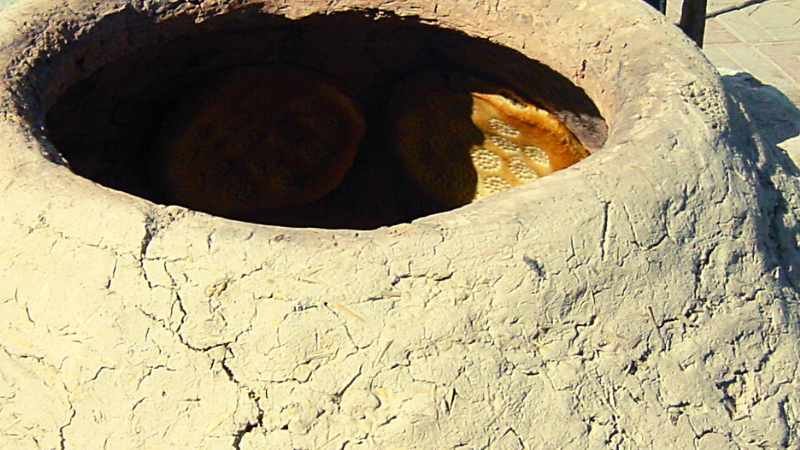
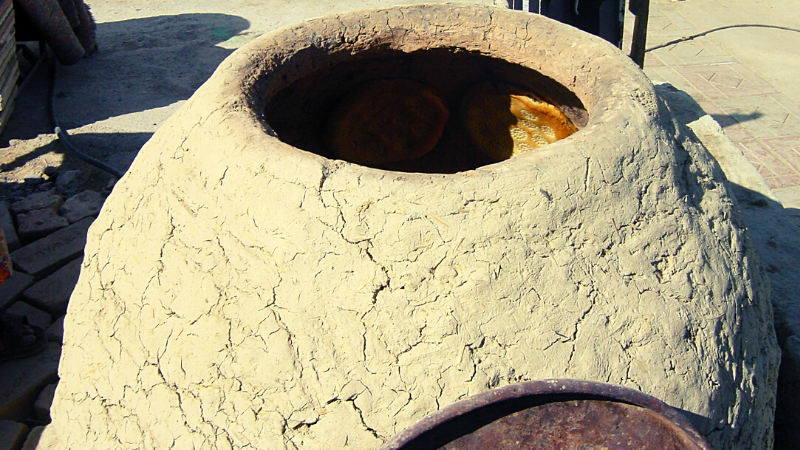
… and the ovens outside the buildings to bake bread.
Soviet Influences Still Present in Turkmenistan
In many ways, life in Turkmenistan also took me back to my childhood. My country Estonia had tried to cut out as many “Soviet things” as possible after independence. Yet Turkmenistan had quite a few of them still present in its daily life. For instance, many people drove Soviet cars or had a trying to get to be the first when queuing. The latter was a necessary survival skill in perestroika time with prevailing deficit of everything. The first time I boarded a plane in Turkmenistan, I remember a physical fight. This broke out between some elderly Turkmen women as who could board the plane first! What made it so absurd was that we all actually had seats indicated on our tickets. I also recall the flight attendant who saw me shocked beside these fighting women. She “rescued” me, helping me get to the plane.
Such help was not always there, unfortunately. Once I decided that I would go by myself to buy flight tickets to Uzbekistan. Although I was before the opening and second in the queue, I never managed to get the tickets. The next day, a local colleague had to help me with that. I never mastered the skill of cutting queues—I just was not bold enough to do it.
Visiting Karakum Desert and the Darvaza Gas Crater (“Door to Hell”)
The name of Karakum desert was familiar to me, as this was the best-known desert that one could visit during Soviet times. Visiting the Sahara was not an option then.
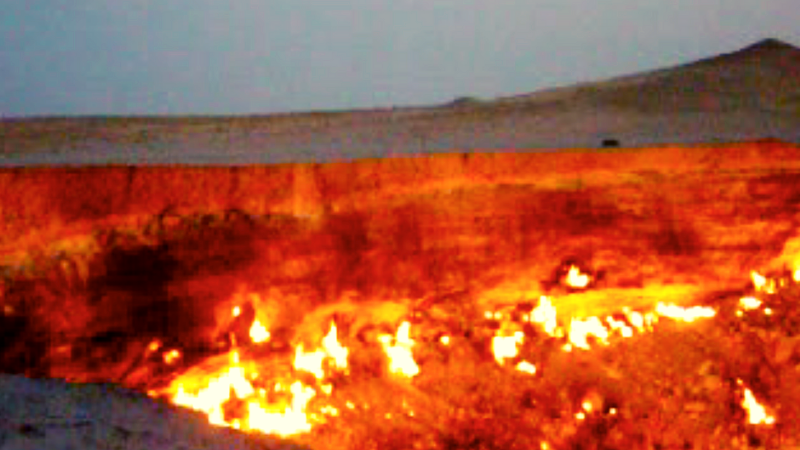
Along with the president’s marble city and the Karakum desert, the burning hole was what impressed me the most in Turkmenistan. After having driven some hours in the Karakum desert, we reached the Darvaza gaz crater. It is also called the “Door to Hell” and is presented on one of the featured photo. The crater is very impressive, beyond what I could imagine.
I also remember that we stayed nearby and camped in tents. And I was afraid of scorpions coming and biting me.
The dinosaur’s footprints
When I was first told about the dinosaur’s footprints that you can see in lava, I thought it was a joke. But we visited this place, and it is quite incredible. As in the case of Sarykum sand dune that I described in my post on Russia, the dinosaurs’ footprints on this little stripe of lava…
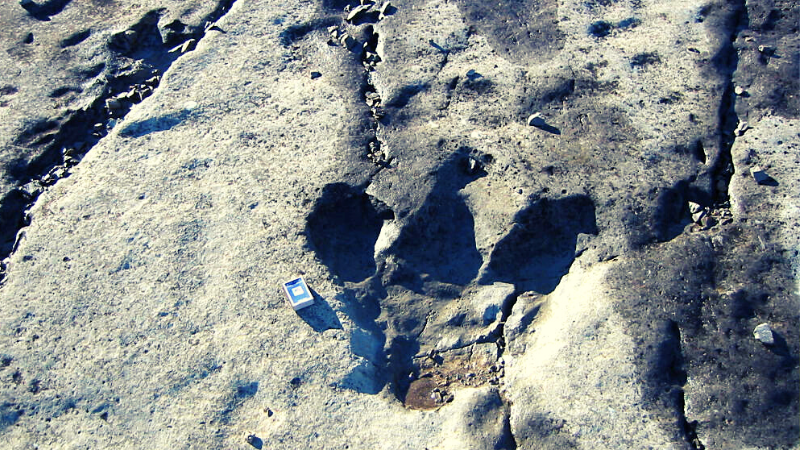
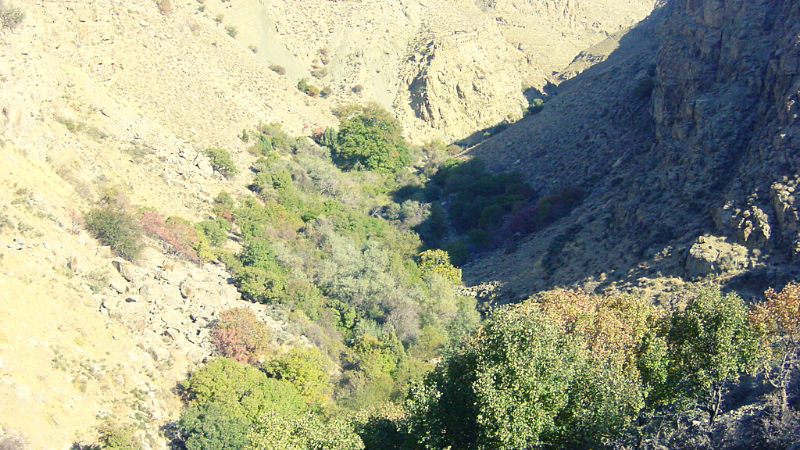
…were so out of place compared to the rest of the landscape of the country.
Caspian sea and Türkmenbashy
My time in Turkmenistan also included my first meeting with the Caspian Sea, during our office retreat in Türkmenbashy. Although it is called a sea, I had learned in school that it is actually the world largest lake. It is also well-known for caviar. I still remember my first time swimming there. Because of the oil industry, it was not as clean as I had imagined.
Working with Tajik an Afghan refugees in Turkmenistan
I was able to travel around quite a lot in Turkmenistan, but this was not my main activity. Most of the time I was visiting Afghan refugees in Ashgabat. My work was to help assess who was particularly vulnerable and should receive financial support. Additionally, an important Tajik refugee community resided in Turkmenistan, and I was able to visit them as well. This mission to Turkmenistan was one of my early experiences working with and for displaced communities—something that I also do now, 17 years later.
Turkmen Culture, Carpets, and Traditional Clothing
We have national clothes in Estonia, but with only a few exceptions (like the little island called Kihnu that I described in my sustainable vacation blog post), no one is walking around in national clothes in Estonia. Those who have them mostly participate in a choral or national dance group and use the traditional clothes during performances. Yet in Turkmenistan, at least in 2004, most women wore traditional clothes all the time!
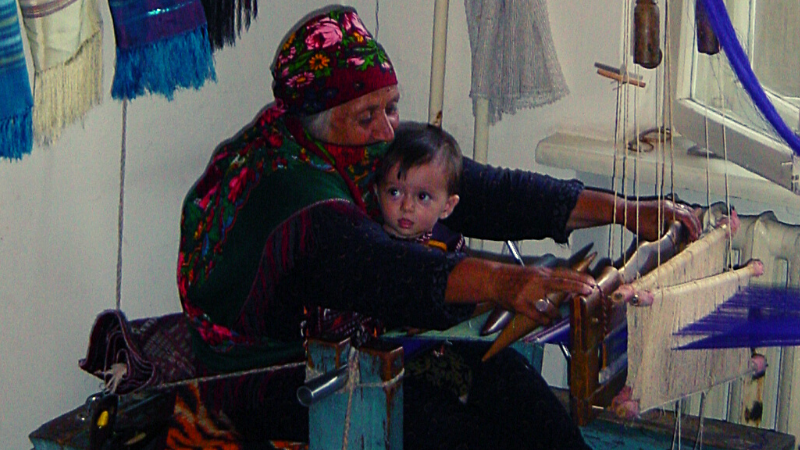
I even got a traditional garment for myself! And it is not only the clothes – even shoes can be made from this traditional embroidery.
And then the Turkmen carpets! The best-known are the red ones, but there are many different kinds. The silk ones from neighbouring countries can also be bought there, and at the time they were not expensive compared to the prices in Europe, so many expats bought a lot of them.
In short, an amazing country that I recommend you to visit and very nice people to get to know.
Planning a Trip to Turkmenistan?
If this post has inspired you to discover Turkmenistan for yourself, you can browse accommodations in Ashgabat, Mary, Dashoguz, Türkmenbaşy, and beyond.
Find flights and hotels in Turkmenistan here
Some links in this post are affiliate links. If you choose to book through them, I may earn a small commission at no additional cost to you. Thank you for supporting Serene & Green Living and helping me continue creating thoughtful content about mindful travel, sustainability, and conscious living.
It made me travel (also back in time). Thank you for your wonderful post and pictures!
Thank you Sara!
Thank you Veronika, I loved reading about this country, you really took us there !
Lots of love to the 5 of you !
Thank you Danya!
Such a fascinating and eye-opening read. Turkmenistan really feels like one of those places that is hard to fully understand until you experience it yourself. The contrast between the surreal marble Ashgabat, Soviet-era daily life, and the vast landscapes of the Karakum Desert sounds unforgettable. The Darvaza gas crater has been on my bucket list for years — such a unique and mysterious place.
Thank you so much for this thoughtful comment. I think you describe Turkmenistan very well — it really was one of those places that felt difficult to fully grasp logically because so many different realities seemed to coexist at once. The contrast between the surreal marble Ashgabat, everyday Soviet remnants, and the vast desert landscapes is something that has stayed with me for many years. And yes, the Darvaza gas crater truly felt almost unreal in person — one of the most extraordinary places I have ever visited.
Great writing about loving a complicated place. The images are moving.
Thanks Mary Ann, for your encouraging words! It certainly is a complicated place, but I fell in love with it deeply.
Spending time working with displaced communities sounds like such a meaningful and rewarding way to visit and deep dive into other communities. I’d love to visit Turkmenistan and other countries doing this type of work.
Thank you so much. It was definitely one of the greatest privileges of my life. Working with displaced communities gave me a very different way of seeing the world — slower, deeper, and far more human than many forms of travel.
Turkmenistan was especially fascinating because it felt so little touched by global tourism, with such a distinct atmosphere and rhythm of life. At the same time, doing this kind of work also humbled me a lot. You realize very quickly that you arrive thinking you will “help,” but often you are the one who leaves changed.
Amazing! First time hearing about this country! Looks beautiful 😍
Thank you! 😊 It is one of those countries that almost feels unreal when you are there — very different from most places people usually travel to. I think that is partly why I found it so fascinating. Central Asia in general is incredibly underrated and full of history, culture, and landscapes that many people rarely get to see
Wow that dinosaur footprint is so cool! You can find the most unusual and cool things in the most unsuspecting places!
I thought the same! It was one of those moments that makes travel feel so magical — stumbling across something completely unexpected and realizing history has been quietly sitting there all along.