

Updated: 2 months ago
I knew there would be rejection. Quite a lot of it, in fact. But I still did not expect it to become such a large part of my life this spring.
Over the past few months, I have queried literary agents, applied for countless jobs, and poured hours into growing a blog that often feels invisible. Possibly because I decided to write more about what is actually on my mind and less about what search engines seem to prefer.
The responses have been remarkably consistent.
No.
No, thank you.
Not the right fit.
Or nothing at all.
Even Google appears unconvinced that I should be allowed to write about cancer, conscious living, or travel instead of sticking to sustainable living tips.
There have been moments when I felt frustrated, discouraged, and even hopeless. Moments when I wondered whether I was wasting my time.
And yet, every morning, I find myself trying again.
These are some of the things that have helped me keep going. None of these ideas are original. Some come from recovery programs, some from books, some from role models, and some from hard-earned experience. Together, they have become my survival kit for difficult seasons.
Letting the Sun Shine on the Feelings
We are human, and rejection does not feel good. It stings—sometimes more, sometimes less.
One thing I have learned is that the healthiest response is not to fight difficult feelings or bury them. Believe me, I have tried both. It does not work. The feelings simply find another way to surface later.
Instead, I try to acknowledge them and let myself feel them. Because when we hide our disappointments, failures, and fears, we leave them sitting in the dark. And darkness is where shame likes to grow.
The two things that help me most are writing and talking to supportive people. In some ways, writing this blog post is one way I am processing the rejection I am experiencing right now.
And nothing quite matches the healing that happens when we share our disappointments with people who know how to sit with them without trying to fix them. Bringing difficult feelings into the light allows them to soften. It is a bit like opening the curtains and letting the sun shine in.
Walking Around Negative Thought Puddles
Rejection has a way of waking up shame.
Thoughts such as “My writing is not worth publishing,” “I am too old for the job market,” or “I will never find an interesting job” can begin circling in the mind, especially when rejection arrives in clusters.
One tool that has helped me comes from Acceptance and Commitment Therapy (ACT). Rather than arguing with these thoughts or trying to eliminate them, I acknowledge their presence but choose not to engage with them.
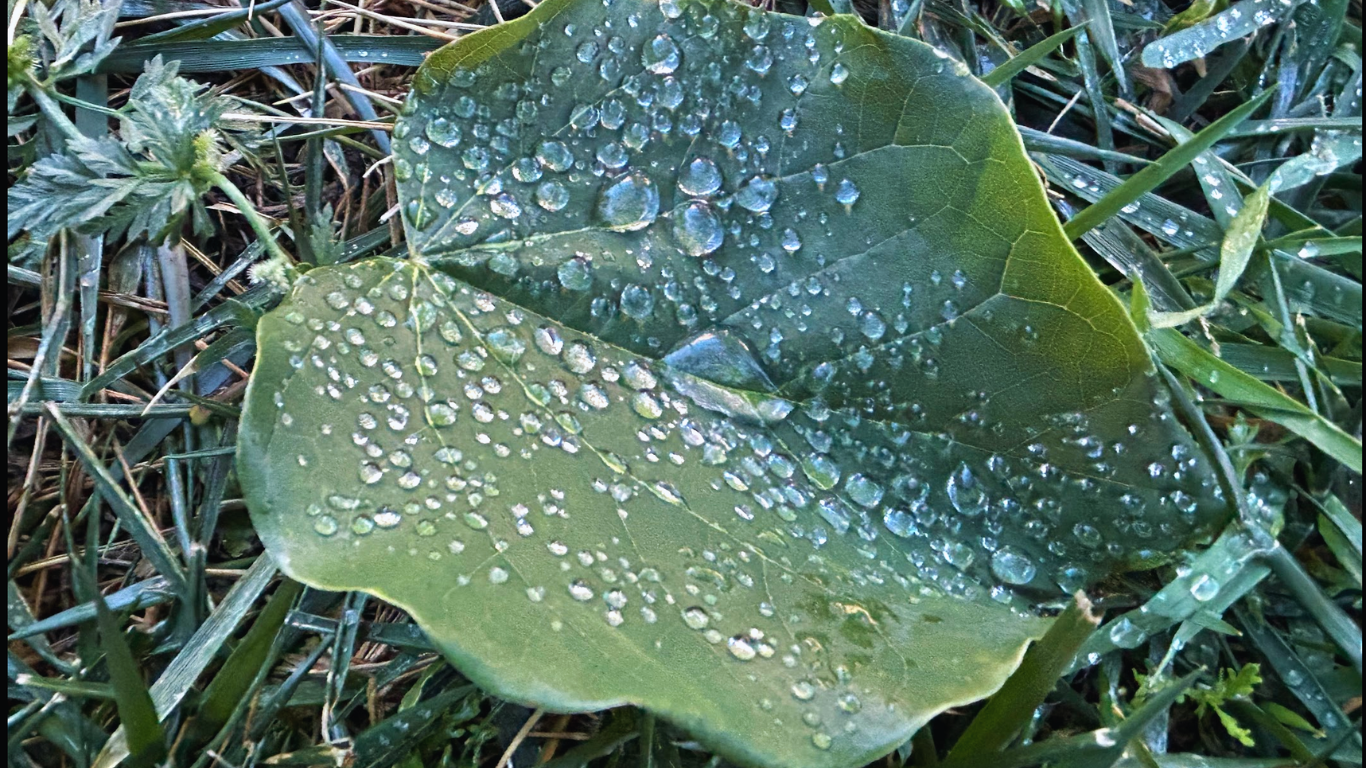
I think of them as puddles after a rainstorm.
The puddles are real. I can see them. But I do not have to step into every single one.
Instead, I can walk around them and continue on my way.
This simple image has helped me avoid many spirals of negative self-talk. The thoughts may still be there, but they no longer get to decide where I go.
Regular Positive Affirmations
Another thing that has made a surprisingly big difference in my ability to keep going through rejection is positive affirmations.
I have used them on and off for more than twenty years, but it was only recently, after coming across Lavendaire’s affirmations, that they became part of my regular evening routine.
Most evenings, I simply let them play. I do not repeat the affirmations and often do not even listen to the entire recording. Yet over time, I have noticed something shifting. My sense of self-worth feels more stable. The negative self-talk vultures still circle occasionally, but they spend less time in my head.
It is as if the affirmations gradually let more light into my mind. And shame, much like mold, struggles to grow in bright places.
I can only imagine that the effect would be even stronger if I repeated the affirmations aloud and practiced them more consistently. But even this imperfect version has helped me remember that rejection is an event, not an identity.
Lists of Small Actions
One tool that helps me through almost every uncomfortable season is breaking big goals into very small actions.
Whether I am looking for a job, querying agents, growing a blog, or trying to improve my health, the principle is the same: make the next step small enough that it feels doable.
I do not keep these actions on a traditional to-do list. Long to-do lists tend to feed overwhelm and burnout in my case. Instead, I spread tasks across the days in my agenda, making sure that no day feels impossible. If one day becomes too crowded, I simply move something to another day.
When rejection comes, I first try to acknowledge the feelings and let some sunlight reach them. I write. I talk. I let myself feel disappointed.
But then comes the important part.
I look at my agenda and do the next thing that is planned for that day.
Not because I feel inspired.
Not because I suddenly feel confident.
Not because the rejection no longer hurts.
I do it despite feeling discouraged, scared, ashamed, or uncertain.
To me, this is a form of self-loving discipline.
Not the harsh discipline that criticizes and pushes. The kind that gently takes your hand and says, “I know this is hard. But let us keep going.”
Recovery programs often call this taking the next right action.
Not the perfect action. Not the heroic action. Just the next one.
Over time, I have found that this simple practice prevents rejection from turning into paralysis. The feelings are allowed to exist, but they do not get to decide whether I move forward.
Using Inspiration
I do not think I would have become a mother of four, completed a PhD, finished a novel, or pursued my dream of seeing every country in the world with care without people who inspired me along the way.
I actively seek out role models and lean on them when life feels difficult. Some I know personally. Others I have never met.
These days, whenever my mind wanders into the “I am too old for that” territory, I think of the film Nyad. It tells the story of Diana Nyad, who at the age of sixty finally achieved her lifelong dream of swimming 110 miles from Cuba to Florida without a shark cage.
What moves me is not just the physical achievement, but her refusal to let age define what was possible. It is a powerful reminder that dreams do not come with expiration dates.
When it comes to writing, I often think about Virginia Evans. Before she was traditionally published with her bestselling novel The Correspondent, she wrote seven unpublished novels. Seven.
Whenever I receive another rejection from an agent, I remind myself of that. Her perseverance in the face of rejection helps me keep going. And the fact that The Correspondent is an epistolary novel gives me hope for my own.
Sometimes, however, the role model I need is someone much closer. A friend. A former colleague. A mentor. In difficult moments, I often ask myself a simple question:
“What would they do in this situation?”
More often than not, the answer points me in a better direction than fear does.
Nourishing My Faith
When rejection happens, I rarely see it as an opportunity to strengthen my faith.
Quite the opposite.
My first reaction is often disappointment, frustration, or even resentment toward whatever force is guiding this strange journey we call life. I wanted something. I worked hard for it. And I did not get my way.
It is usually only after some time has passed that I am able to see rejection differently.
Perhaps faith is not something we have once and for all. Perhaps it is something that needs regular nourishment. And rejection, uncomfortable as it is, can become one of its greatest teachers.
After all, it is easy to trust when things are going our way. It is much harder when doors keep closing and the future feels uncertain. That is when faith asks us to make a leap.
Sometimes I wonder whether rejection is not always a sign that something has gone wrong. Perhaps it is an invitation to grow closer to whatever we call the sacred—God, a Higher Power, the Mystery, or simply something greater than ourselves.
Three sayings from the recovery community have been particularly helpful to me during difficult seasons.
Rejection Is God’s Protection
This saying has proven true so many times in my own life.
With hindsight, I can see how I was protected from jobs, relationships, and opportunities that ultimately would not have been right for me. At the time, I experienced only the disappointment of the closed door. Later, I often saw why it had closed.
God Has Three Answers: Yes, Not Yet, or I Have Something Better for You
I return to this saying often.
It reminds me that a rejection is not always a final answer. Sometimes it is simply a delay. Sometimes it is a redirection. And sometimes, though it is difficult to believe in the moment, something better really is waiting around the corner.
When I look back on my life, I can think of many situations where what I eventually received was far better than what I had originally hoped for.
Don’t Give Up Before the Miracle Happens
This may be my favorite recovery saying.
Not because it guarantees a miracle, but because it encourages perseverance.
It reminds me that I cannot know what is around the next corner. The breakthrough, healing, opportunity, or transformation I am hoping for may be much closer than I think.
My job is not to control the outcome.
My job is simply to keep walking.
Final Thoughts
I do not know whether I will find an agent.
I do not know which job will eventually say yes.
I do not know whether this blog will ever grow beyond its current small corner of the internet.
What I do know is that none of those things can happen if I stop.
So for now, I keep going.
I let some sunlight reach the feelings. I walk around the puddles of negative thinking. I listen to affirmations. I take the next right action. I borrow courage from people who inspire me. And when all else fails, I try to trust that there may be a larger story unfolding than the one I can currently see.
One day at a time. One rejection at a time. One small step at a time.
Looking back, all of these tools have something in common.
They help me remember the way back.
Rejection has a way of making me smaller. It tempts me to retreat, to stop seeing possibilities, to stop choosing courage, and sometimes even to stop fully participating in life.
These practices help me return.
They help me keep seeing, choosing, and being — what I call living awake.
The rejections may continue.
But so will I.





I feel this on so many levels. The important thing is that you keep going. Like they say, “nothing changes if nothing changes.” Keep pushing forward.
Thank you for this thoughtful comment. I really like that saying—nothing changes if nothing changes. Sometimes the hardest part is simply continuing to take the next step, especially when the outcome is uncertain. Thank you for the encouragement.
We have to enjoy life one moment at a time. Bringing difficult feelings into the light allows them to soften. It is a bit like opening the curtains and letting the sun shine in.
Thank you for this thoughtful comment. I’m glad that image resonated with you. Writing this post reminded me how much easier it is to carry difficult feelings when we stop hiding them and allow them into the light. Thank you for reading and sharing your perspective.