
Updated: 20 minutes ago
What comes to mind when you hear the word Mexico?
Before I had the chance to visit this incredible country, and replace borrowed images with memories of my own, Mexico meant a handful of things to me: the Aztecs and the Maya, Mexican food, migration, and the Mexico I had seen portrayed in American movies.
My first images came from school.
I remember being fascinated when I learned about the Aztec and Maya civilizations. Somehow, the Aztecs settled into my childhood imagination as fierce and dangerous warriors, while the Maya seemed more peaceful. Perhaps it was nothing more than the feminine sound of the name Maya that shaped this impression. I also recall a sense of sadness that these extraordinary civilizations had faded into history.
Then came food.
I discovered Mexican food in my twenties, while living in Paris. For years, I worked as a waitress, including for a while in a Mexican restaurant. That was where burritos, tacos, quesadillas and enchiladas entered my life.
I liked them immediately. Luckily, because before each service we were given a free meal, and as a student on a tight budget, I relied rather enthusiastically on that particular employee benefit.
And then there was the Mexico of American movies.
That Mexico was very different. It was often a backdrop for poverty, drugs, cartels and gangs. Or partying. A place to escape across a border, in one direction or the other. A country associated with gardeners and nannies rather than artists, intellectuals, ancient civilizations and extraordinary cultural richness.
Then I finally went there myself.
Mexico City, Acapulco and Urban Insecurity
My first visit to Mexico, in 2012, was professional. I was there on a support mission to explore how my organization and its partners could better support the self-protection of people affected by organized violence.
Mexico City felt remarkably green and modern, although I never made it into the historic center and spent most of my time in the neighborhood where my organization had its office.
And then there was the food. Again.
I remember being blown away by what I ate. I had already learned to appreciate Mexican food during my waitressing years in Paris, and had eaten it in other countries since, but this was something else entirely. The flavors seemed deeper, fresher, more complex. Mexican food in Mexico was simply on another level.
Our work also took us to Acapulco.
I knew Acapulco as the legendary mid-20th-century resort that had once been a playground for Hollywood stars, a place of Golden Age glamour sometimes called the “Riviera of Mexico.” Even in 2012, traces of that former glory were everywhere, particularly in the grand hotels lining the coast. It reminded me, in a very different way, of the faded grandeur I had encountered while traveling through Albania.
I remember staying in one of those rather fancy hotels. Not because my employer had a habit of showering us with luxury. It was simply that for roughly the price of a three-star hotel elsewhere, in Acapulco we could stay somewhere considerably grander.
There was something slightly melancholy about it. These enormous hotels seemed to belong to another era, waiting for visitors who no longer came in the numbers they once had.
And there was a reason I was in Acapulco in the first place.
By 2012, the city had become notorious for organized violence. That year, Acapulco was reported as the most violent city in Mexico and the second most violent city in the world, with a homicide rate of around 142 per 100,000 inhabitants.
The contrast was difficult to miss: a city built around beaches, glamour and pleasure had become a place where my work centered on how ordinary people could better protect themselves from violence.
Fortunately, by the time I am writing these reflections, Acapulco’s homicide rate has fallen considerably from those extraordinary levels.
Ensenada
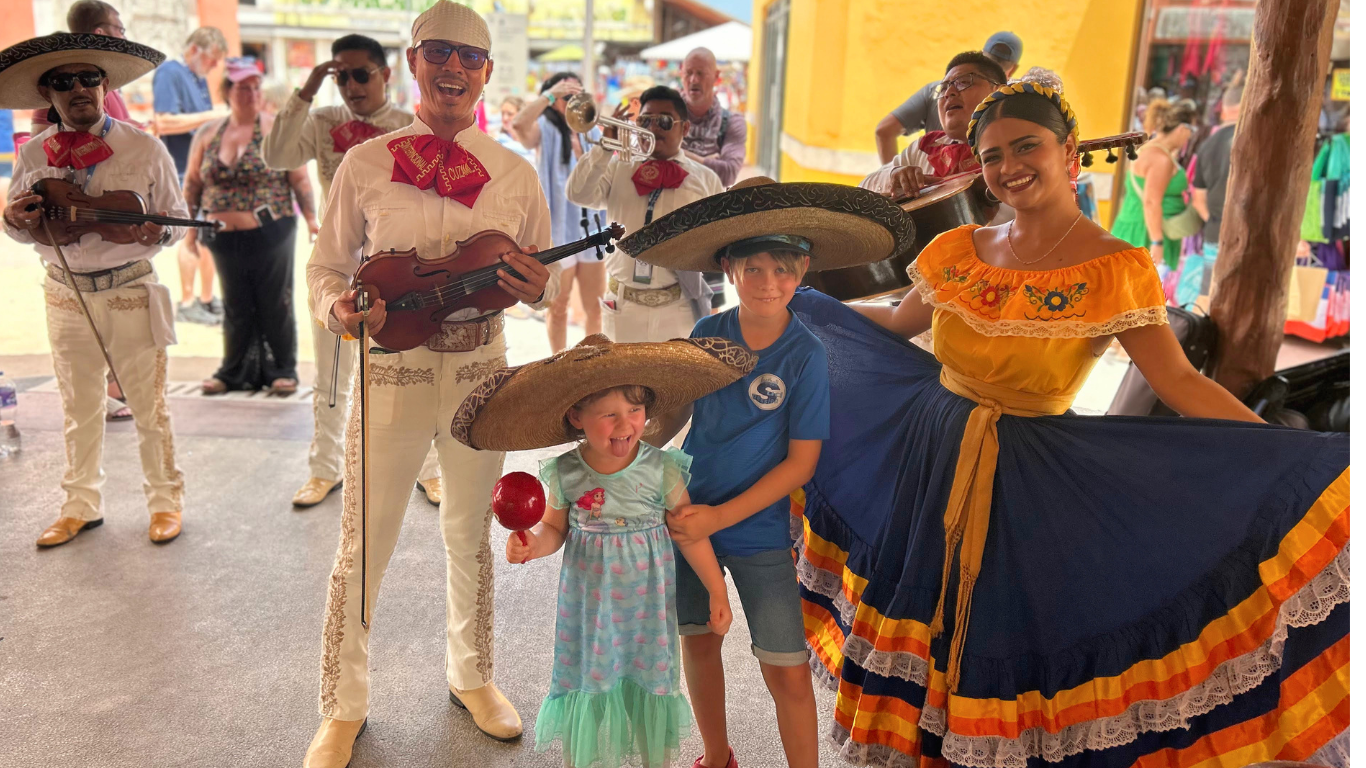
We visited Ensenada during our first-ever cruise, and I don’t think any of us will forget it. It became an adventure of its own kind.
We had somehow managed to leave the ship without any cash, and the credit cards we had brought with us refused to work. So there we were, wandering through the streets, admiring stalls overflowing with wonderfully colorful Mexican souvenirs, yet unable to buy a single thing.
In the end, there were only two activities our unfortunate finances allowed us. We visited a former local prison that had been turned into a museum and was free to enter, and we eventually found our way to Starbucks, where my husband discovered, to our great relief, that he could pay with Apple Pay.
I asked my boys what they remember about Ensenada. In addition to our no-cash story, they remember seeing a truck with armed men sitting openly in the back, their weapons in their hands, seemingly ready to use them if needed. They also remember the visible poverty, perhaps more acutely because they had grown accustomed to the comfortable surroundings of California’s Bay Area.
Rather ironically, though, that day we were the ones who couldn’t pay for anything.
Costa Maya
I discovered Costa Maya during my third visit to Mexico, this time also with my whole family. It will always stay with me as the place where the Maya civilization, which had fascinated me since childhood, suddenly became something tangible.
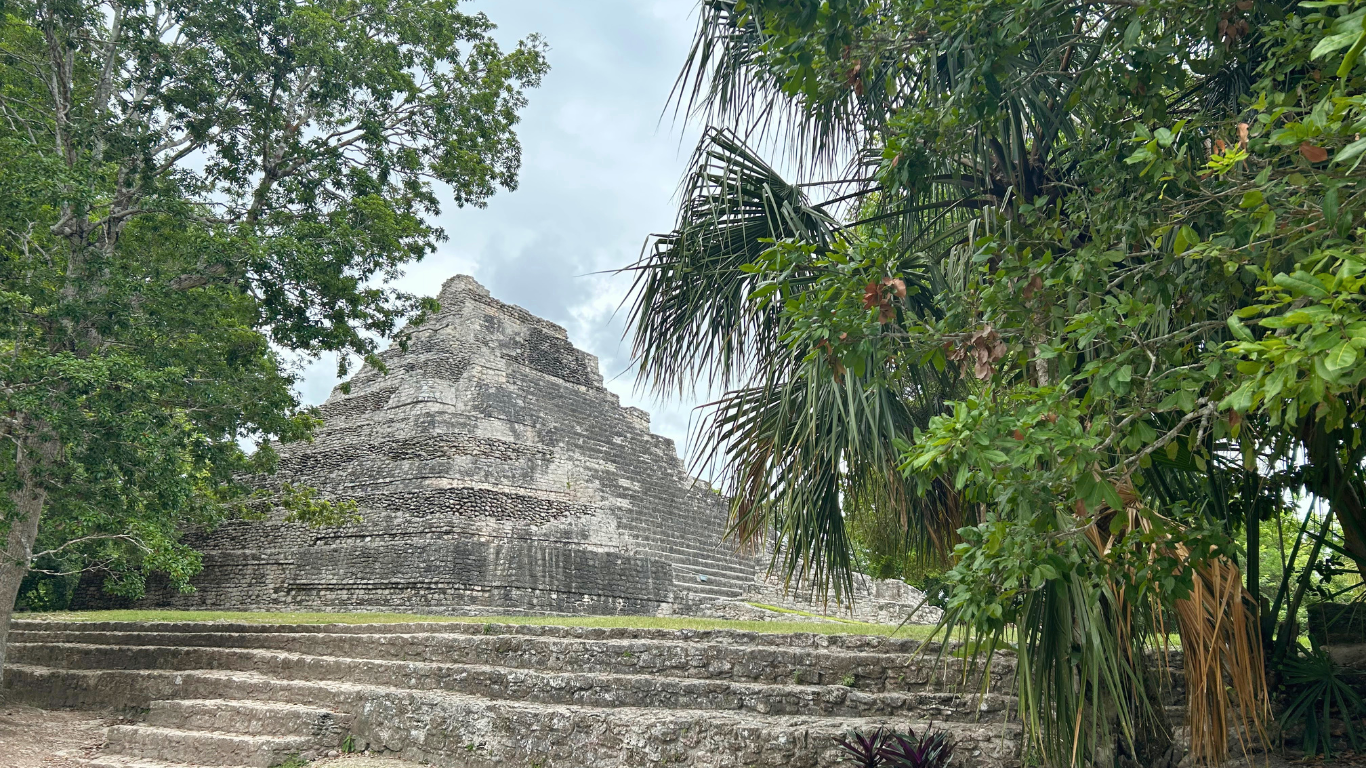
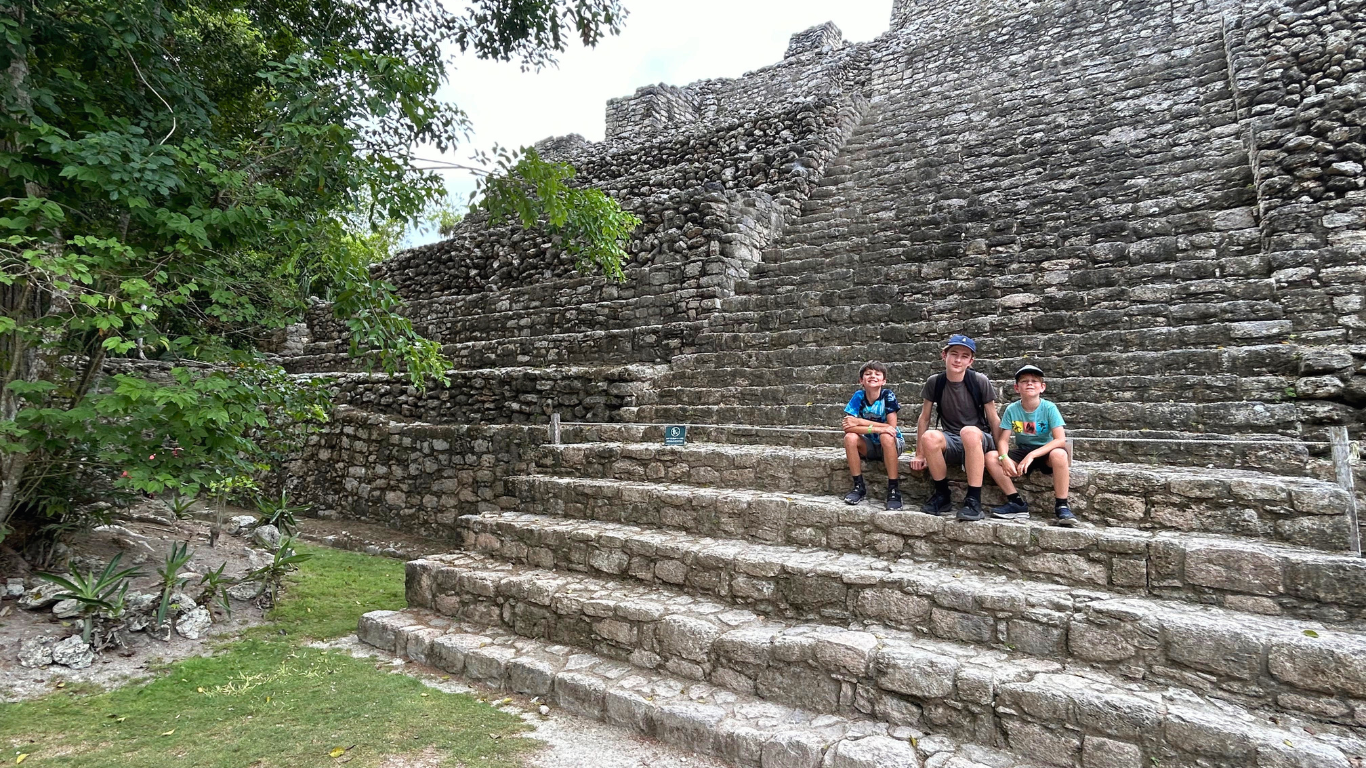
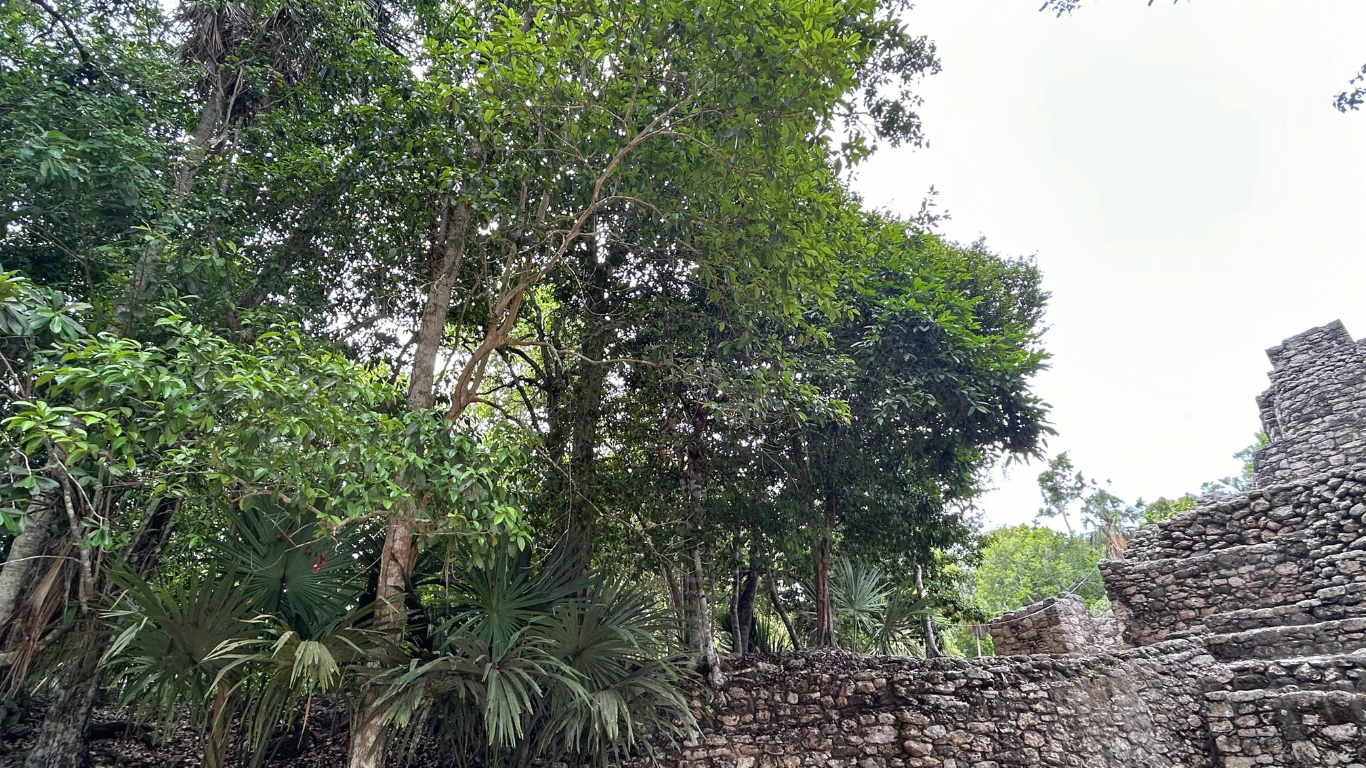
We visited the Chacchoben ruins, first settled by the Maya around 200 BC, with their major structures dating from around 700 AD. In the 1940s, the Cohuo family established a farm beside the long-forgotten ruins, where their children grew up playing among the remains of the ancient city. Then, in 1972, archaeologist Peter Harrison was flying over the area by helicopter when unusual hills rising from the otherwise flat landscape caught his attention. Beneath the vegetation, he realized, were ancient Maya temples.
There was something almost magical about that story when I stood there myself. Nature had slowly swallowed an entire city, preserving it beneath layers of green.
The interplay between the ancient stone and the lush vegetation was simply beautiful.
Cozumel
In Cozumel, we decided to enjoy another facet of what Mexico is famous for: its beaches. We spent the day at KUZÁ Beach and were not disappointed. The water was irresistible, and combined with sunshine, music and Mexican food, it made for a wonderfully carefree day.
On our way back from the beach, we were lucky enough to catch one of the little vehicles normally reserved for visitors with reduced mobility. It carried us along a narrow path through the mangroves toward the parking area. Most visitors could not take this route and instead had to climb the stairs and follow a long wooden walkway above the mangroves.
Curious, we asked why people could not simply walk along the same path our vehicle was taking.
The answer took me completely by surprise: to avoid encounters with crocodiles.
Crocodiles?
I could hardly believe that I had just spent the day happily letting my children splash in the Caribbean while crocodiles inhabited the mangroves nearby.
I was also rather grateful that I learned about them only on our way out. Had I known at the beginning of the day, I am not entirely sure I would have let my children into that irresistible turquoise water quite so carefree.

Mexico as a Country of Migration
There is one more image of Mexico that has followed me for years: Mexico as a country of migration.
Perhaps because so much of my professional life has been connected to displacement and migration, I have long thought of Mexico as occupying a particularly complex place on the migration map. It is simultaneously a country people leave, a country millions travel through on their way north, often after crossing Central America and the Darién Gap, and a country that receives people fleeing hardship elsewhere in Latin America and beyond.
Over the years, the news has offered painful glimpses into what some migrants have endured along these journeys: violence, exploitation, dangerous routes and an uncertainty that can stretch on for months or years.
But this image of Mexico, too, is changing.
Migration north through Central America and Mexico declined dramatically in 2025. According to IOM, encounters at the U.S. Southwest border fell by 89 percent, from 1.6 million in 2024 to fewer than 180,000 in 2025. At the same time, almost half of the migrants surveyed by IOM in Mexico in mid-2025 said that Mexico itself was their intended destination, compared with fewer than a quarter at the end of 2024.
Mexico is increasingly becoming not only a country people pass through, but a country where people choose, or find themselves needing, to stay.
Irregular migration has not disappeared, nor have its dangers. Tighter controls have changed routes and, in some cases, pushed people toward greater risks and more expensive smugglers. But the changing patterns are another reminder that countries, like people, rarely fit neatly into the images we create of them.
And perhaps that is what my different encounters with Mexico have taught me most.
The Mexico I knew before ever setting foot there was assembled from schoolbooks, restaurant kitchens, migration stories and American movies. The Mexico I encountered was far more complicated: the astonishing flavors of Mexico City, Acapulco’s faded glamour and violence, an unexpectedly penniless day in Ensenada, Maya temples emerging from the jungle in Chacchoben, turquoise Caribbean water and crocodiles hidden among the mangroves of Cozumel.
None of these is Mexico on its own.
A country is never just the images we inherit, nor even the ones we collect while traveling through it. It is all of them layered together, constantly changing, and always leaving something more to discover.


Leave A Comment